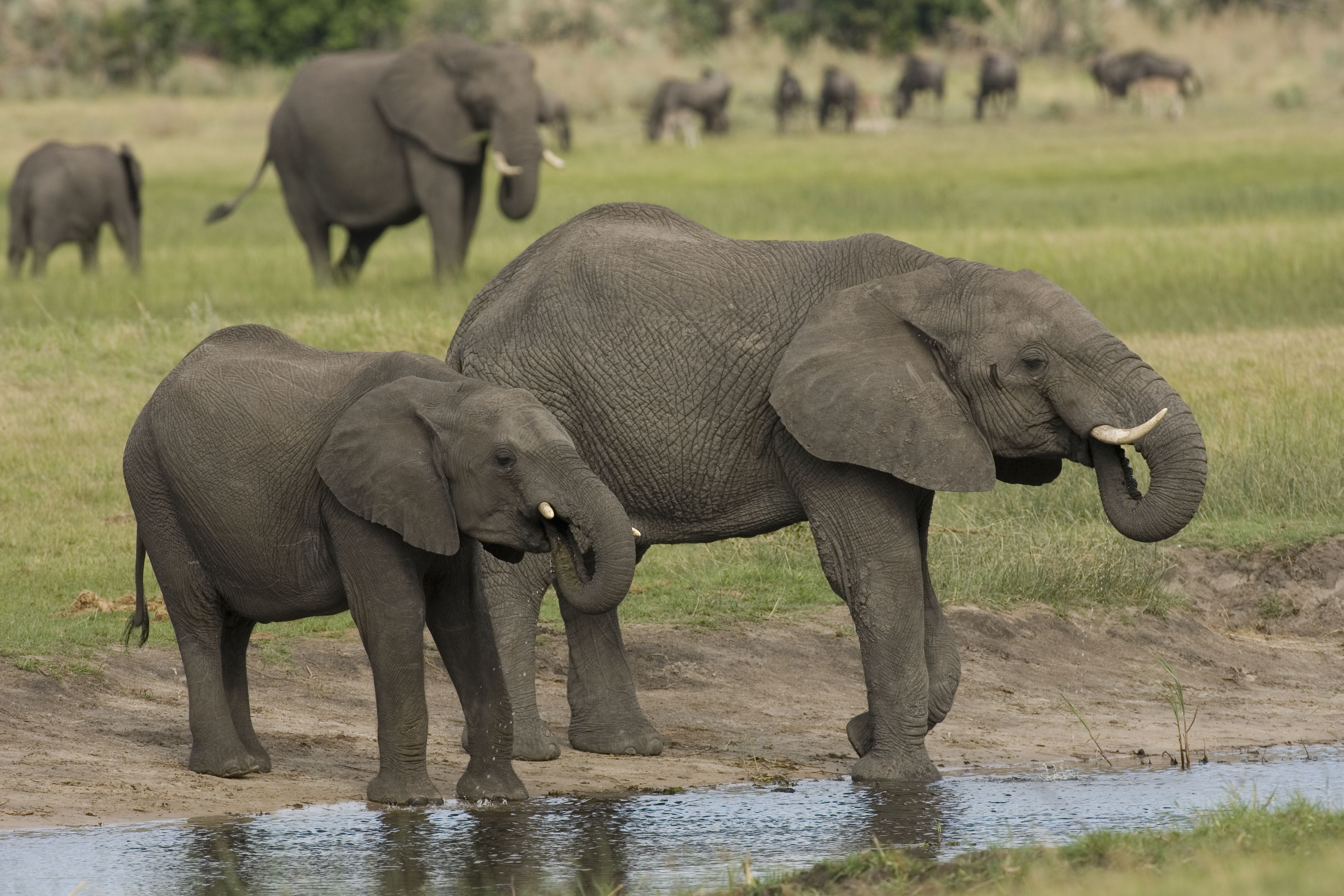
In Botswana, 40% of the territory is under some type of legal environmental protection, with 17% classified as protected areas. However, limited funding increased their exposure to habitat loss, ecosystem conversion, and other pressures. Protected area fees had not been updated since 2000 in the country, contributing to this situation.
The Department of Wildlife and National Parks of Botswana, with support from the Biodiversity Finance Initiative (BIOFIN) of the United Nations Development Programme (UNDP), revised protected area fees across all national parks and game reserves in the country, except the Kgalagadi Transfrontier Park. Revised fees became effective on April 2022.
In 2023, protected area fees in Botswana generated around US$7.8 million (BWP 103.9 million) of revenue, compared to $4.6 million (BWP 61.3 million) in 2019. This achievement strengthens biodiversity conservation in the country.
CONTEXT
Entrance, vehicle, camping, and other visitor fees are usually the main source of self-generated revenue for protected areas. Nonetheless, these fees have remained unchanged since 2000 in Botswana. As a result, the only way to generate additional revenue was through an increase in visitor numbers.
For example, in 2019, the revenue from protected area fees in Botswana amounted to $4.6 million (BWP 61.3 million), below the funding required for effective management. In fact, the Department of Wildlife and National Parks' expenditure on protected area management was $9.7 million (BWP 128.7 million) during the same year, significantly relying on other funding sources.
This situation intensified the exposure of protected areas to habitat degradation, poaching, unsustainable use of wild plants, human-wildlife conflicts, and other pressures.
PROCESS
The calculation of new protected area fees in Botswana followed an evidence-based process that included analysing data, benchmarking against fees in other countries, reviewing willingness-to-pay studies, conducting field visits to assess assets and service quality, and projecting inflation impacts. Findings informed consultations and workshops with key stakeholders, who provided further insights and considerations. Ultimately, a differentiated fee structure was adopted, reflecting stakeholders' inputs and the evidence collected.
Combining methods to calculate evidence-based protected area fees
A consulting team used several methods to calculate new protected area fees in Botswana, including:
• Benchmarking exercise: Desk and data review to compare fees in Botswana with those in South Africa, Zambia, Namibia, Zimbabwe, Mozambique, Eswatini, Kenya, Tanzania and Uganda, focusing on fee objective, criteria, categories, types, and amount.
• Review of willingness to pay studies: Used to estimate the value of non-market goods by asking respondents how much they would pay for entrance and use of protected areas, considering different scenarios of improved management. Four of these studies were conducted in Botswana.
• Field visits to assess assets and the quality of services: Field visits and interviews with protected area management teams to assess wildlife viewing opportunities and the availability of services, roads, staff, and accommodation. These assets and their quality were considered as inputs in calculating fees.
• Impact of inflation: Projection of the current value of protected area fees from 2000, if adjusted for inflation.
These methods were integrated to ensure a comprehensive and evidence-based approach in defining new fees that reflect current market value.
Enabling factors
Availability of previous willingness-to-pay studies in Botswana, access to literature and data from other countries, willingness of protected area management teams to participate in interviews, and funds for research efforts.
Lesson learned
• The review of willingness-to-pay studies showed that regional visitors are inclined to pay less than other international tourists visiting Botswana's protected areas.
• Evidence-based processes for defining protected area fees, such as data analysis, literature review, and benchmarking with other countries, provide a framework for justifying new fees, thereby enhancing the likelihood of success and public support.
Stakeholder-led approach to design new protected area fees
Results from the benchmarking exercise, data analysis, and literature review were discussed with stakeholders through consultations and workshops, enabling key actors to provide inputs and raise their concerns. For instance, in the workshops in Kasane and Maun, participants were divided into groups and asked to jointly develop considerations on fee setting criteria and fee amounts.
This participatory approach was led by the Department of Wildlife and National Parks of Botswana and included representatives from non-governmental organizations, local tourism businesses and associations (from tour guides to hotels), community leaders, community-based organizations, and the media. Multistakeholder engagement was crucial to address key actors’ concerns, such as the risk of reduced tourism activity, and to define revised fees.
Enabling factors
Stakeholders’ willingness to participate in consultations and workshops, their openness to consider different perspectives and collaborate toward a shared solution, and the availability of funding for participatory activities.
Lesson learned
• During the participatory process to revise protected area fees, the main concerns and suggestions raised include ensuring affordable access to citizens, supporting the local tourism industry, encouraging visits to less popular protected areas, and conducting regular fee reviews and adjustments.
• Stakeholder consultations are fundamental to design effective interventions and ensure implementation.
Differentiated fee structure according to park, visitor, and activity category
Different protected area fees were established according to park, visitor, and activity category, rather than adopting a one-size-fits-all approach. This decision was based on findings from the review process described in building block 1.
Park visitation data show that some protected areas in Botswana attract more tourists than others. To reflect this, the revised fee structure considers two park categories. Category A includes Chobe and Moremi, the most visited parks, while Category B covers all other parks and reserves, with fees set at 70% of Category A. This approach encourages tourism in less-visited areas while maximizing revenue from the most visited parks.
Studies also indicate that local visitors have a relatively lower willingness to pay for visiting protected areas compared to international tourists. This finding, along with concerns about equity and fairness, led to the definition of different fees for citizens, residents, and non-residents — from less to more expensive.
Fees also vary by activity, such as entrance, camping, participation in safari, research, and filming.
All protected area fees (except for the Kgalagadi Transfrontier Park) were revised, gazetted in 2020 and fully implemented in April 2022.
Enabling factors
Willingness of the stakeholders involved in the design of new fees to incorporate results from studies and consultations, as well as commitment of key political actors to approve revised fees.
Lesson learned
• Protected areas receive different visitors with varied willingness to pay and offer a range of activities with distinct associated values. Considering specific fees by visitor category and activity increases protected area revenue while also addressing equity and fairness concerns.
• Continued monitoring and evaluation of the new fee structure, new investments into the parks, and ongoing stakeholder engagement for periodic reviews are important next steps.

IMPACTS
Revised protected area fees in Botswana generated approximately $7.8 million (BWP 103.9 million) of revenue in 2023, compared to $4.6 million (BWP 61.3 million) in 2019. This achievement significantly exceeded the forecasted increase of $1.8 million (BWP 24 million).
Protected areas in Botswana are home to native fauna and flora, provide clean water and other ecosystem services, and generate income for the local tourism sector, which relies on well-conserved ecosystems to attract visitors. Therefore, increased protected area revenue contributes to better-conserved ecosystems in the country and strengthens local livelihoods.
Beneficiaries
- Botswana's protected areas and ecosystems.
- National and international visitors benefit from well-conserved protected areas.
- The entire population of Botswana benefits from healthier ecosystems and the services they provide.
Global Biodiversity Framework (GBF)
GBF Target 1 – Plan and Manage all Areas To Reduce Biodiversity Loss
GBF Target 3 – Conserve 30% of Land, Waters and Seas
GBF Target 4 – Halt Species Extinction, Protect Genetic Diversity, and Manage Human-Wildlife Conflicts
GBF Target 19 – Mobilize $200 Billion per Year for Biodiversity From all Sources, Including $30 Billion Through International Finance
The article has been written in partnership with Panorama - Solutions for a Healthy Planet
Categories
Countries
Archives
- September 2024 (6)
- August 2024 (9)
- July 2024 (7)
- June 2024 (3)
- May 2024 (6)
- April 2024 (5)
- March 2024 (3)
- February 2024 (6)
- January 2024 (3)
- December 2023 (1)