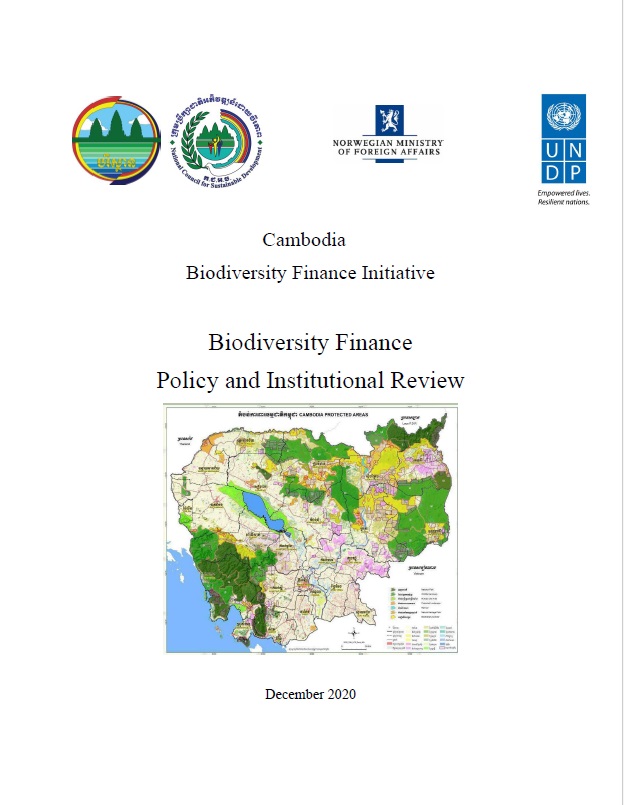
BIODIVERSITY FINANCE
BIOFIN Cambodia
‘Biodiversity Finance Solutions Exhibition – 5th BIOFIN Global Conference’ This poster is part of an series of all BIOFIN countries…

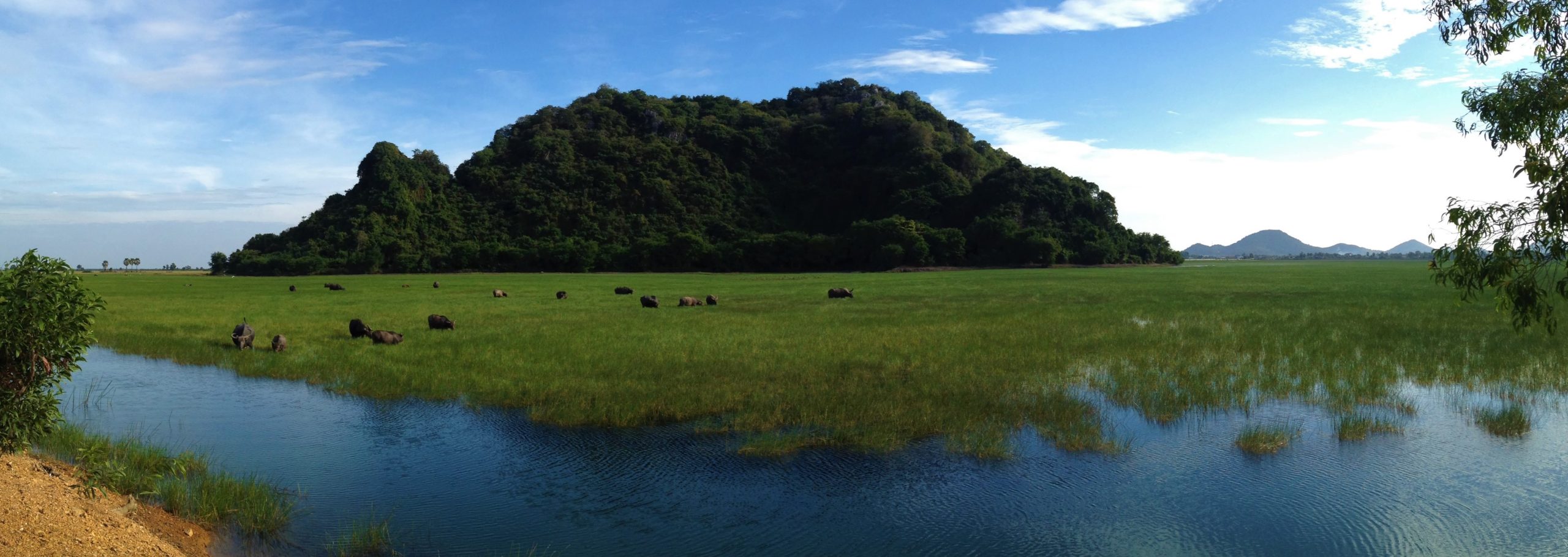






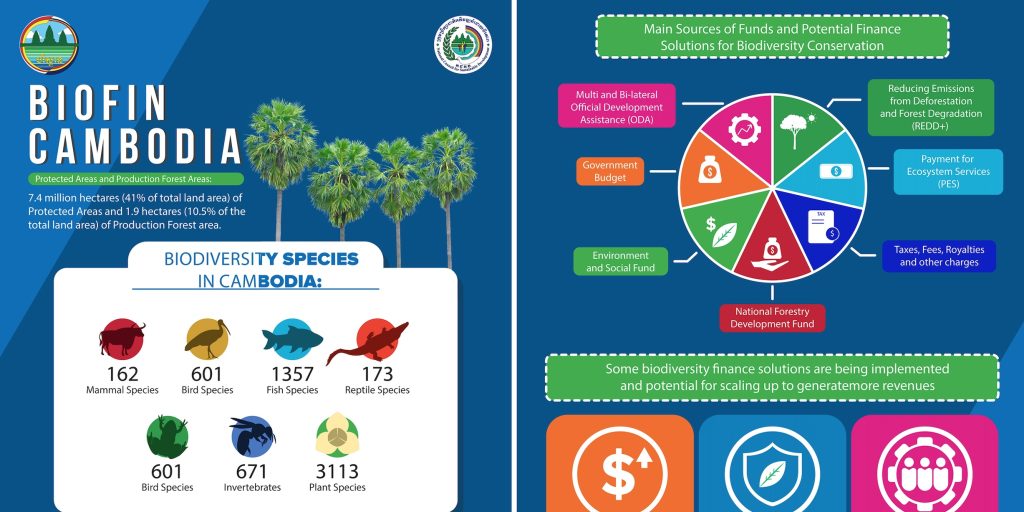
Cambodia is one of Southeast Asia’s most biodiverse countries, with rich forests, wetlands, freshwater systems and coastal and marine ecosystems that support globally important wildlife and provide essential services for people and the economy. The Mekong River, Tonle Sap Lake and the country’s extensive forest landscapes support fisheries, agriculture, food and water security, tourism and the livelihoods of millions of people, making biodiversity an important part of Cambodia’s natural capital and sustainable development.
Yet Cambodia’s biodiversity faces growing pressures from habitat loss and degradation, unsustainable natural resource use, infrastructure and land-use change, climate change and other competing development demands. Protecting and restoring these ecosystems requires substantial and sustained investment, while available resources remain insufficient to fully meet the country’s biodiversity priorities. Mobilizing additional finance and better aligning existing public and private financial flows with nature is therefore increasingly important.
UNDP BIOFIN has worked in Cambodia since 2019 to strengthen the country’s approach to biodiversity finance. Working with the Government and other national partners, the programme has helped assess biodiversity-related policies, institutions, expenditure and financing needs and identify practical opportunities to mobilize and use resources more effectively for conservation and sustainable development.
In its current phase, UNDP BIOFIN is supporting Cambodia to move from analysis toward implementation, advancing finance solutions that can mobilize public, private and innovative finance for biodiversity. This work aims to strengthen investment in ecosystems and protected areas, engage businesses and financial institutions, and better integrate biodiversity into economic and financial decision-making.
1. Developing Sustainable Ecotourism
Empowering local communities to actively and meaningfully engage in biodiversity conservation has become a growing priority in Cambodia, particularly through Community-Based Ecotourism (CBET) initiatives located within or around protected areas (PAs). The primary goal of CBET is to involve communities living in and near these areas in promoting and delivering ecotourism services to both domestic and international visitors. This model enables communities to diversify their income-generating activities while contributing to the sustainable conservation of biodiversity and ecosystems.
CBET has demonstrated multiple co-benefits, including improved livelihoods and enhanced environmental stewardship. Given that most ecotourism sites are situated within PAs managed by the Ministry of Environment (MoE), it is recommended that the Department of Biodiversity explore and adopt this approach to ensure the sustainable management of ecotourism in targeted PAs.
The proposed financing solution focuses on strengthening CBETs by supporting local communities to become Community Protected Area (CPA) entrepreneurs. This includes building their capacity in entrepreneurship and facilitating the implementation of green business practices aligned with biodiversity conservation goals.
2. Promote Payment for Ecosystem Services
Phnom Kulen National Park (PKNP), commonly referred to as Kulen, has been identified as a priority site for establishing a watershed protection payment scheme. Kulen plays a critical role in supplying
clean water to the entire Siem Reap province watershed -Cambodia’s most prominent tourism destination.
Since 2016, UNDP and the Ministry of Environment (MoE) have conducted feasibility assessments to pilot Payment for Ecosystem Services (PES) schemes in PKNP and the Kbal Chhay Multiple Use Area (KCMUA). However, implementation has been delayed due to the COVID-19 pandemic and subsequent global economic challenges.
The emerging watershed PES model is recognized as a promising sustainable financing mechanism that supports biodiversity conservation, nature-based livelihoods, and effective PA management. According to Cambodia’s Sixth National Report to the Convention on Biological Diversity, funding for conservation efforts is sourced from development partners, the private sector, and ecotourism revenues. These diverse funding streams reflect the evolving landscape of PES practices in the country, including varied fund flows and benefit-sharing mechanisms.
The core objective of this financing solution is to operationalize the Kulen watershed PES scheme to enhance the management of PKNP. This area encompasses the entire Siem Reap watershed and serves as a habitat for numerous endangered and rare species.
3. Explore and initiate the blue carbon opportunity for biodiversity conservation
This feasibility study (FS) will explore and initiate opportunities for leveraging blue carbon to support biodiversity conservation through the development of a comprehensive roadmap, outlining clear strategies and recommendations. It aligns with existing initiatives led by the government, development partners, NGOs, and emerging international best practices to establish a well-defined work plan for Cambodia’s national blue carbon strategy and action plan. The development process will involve broad stakeholder engagement and include the participation of international blue carbon experts through targeted consultancy assignments. To further support implementation, the study will facilitate a policy dialogue on the roadmap’s findings and organize an exchange visit to ASEAN countries that have demonstrated success in managing blue carbon initiatives.
The expected impact and outcome of the feasibility study are the expansion and advancement of existing efforts in coastal blue carbon conservation and restoration, generating positive biodiversity outputs and outcomes. This includes strengthening policy frameworks, institutionalizing blue carbon initiatives, enhancing financial and scientific capacities, and increasing the engagement of all relevant stakeholders.
Developing Cambodia's First Biodiversity Finance Plan
BIOFIN supported Cambodia in completing the full suite of biodiversity finance assessments, including the Policy and Institutional Review (PIR), Biodiversity Expenditure Review (BER), Financial Needs Assessment (FNA), and Biodiversity Finance Plan (BFP). Together, these analyses provided the country's first comprehensive assessment of biodiversity financing and established a national roadmap for mobilizing additional resources to implement Cambodia's National Biodiversity Strategy and Action Plan.
Identifying Cambodia's Biodiversity Finance Gap
The Biodiversity Finance Plan found that Cambodia required approximately US$305 million annually to implement its biodiversity priorities in 2018, while actual biodiversity expenditure was only US$112 million, leaving an annual financing gap of around US$193 million. These findings now provide the evidence base for Cambodia's biodiversity finance and resource mobilization strategies.
Prioritizing Five Transformative Finance Solutions
Following extensive consultations across government, development partners, civil society and the private sector, BIOFIN identified five priority finance solutions for implementation between 2021 and 2026. These include community-based ecotourism, Payments for Ecosystem Services (PES), strengthening REDD+, promoting biodiversity-friendly agriculture, and enhancing institutional capacity for biodiversity finance. These solutions are designed to diversify funding sources while improving biodiversity conservation and sustainable livelihoods.
Strengthening Institutional Coordination
BIOFIN has strengthened collaboration between the National Council for Sustainable Development, the Ministry of Environment, and other government agencies, creating a stronger institutional foundation for biodiversity finance planning and implementation. The programme has also informed Cambodia's updated National Biodiversity Strategy and Action Plan and subsequent biodiversity finance discussions.