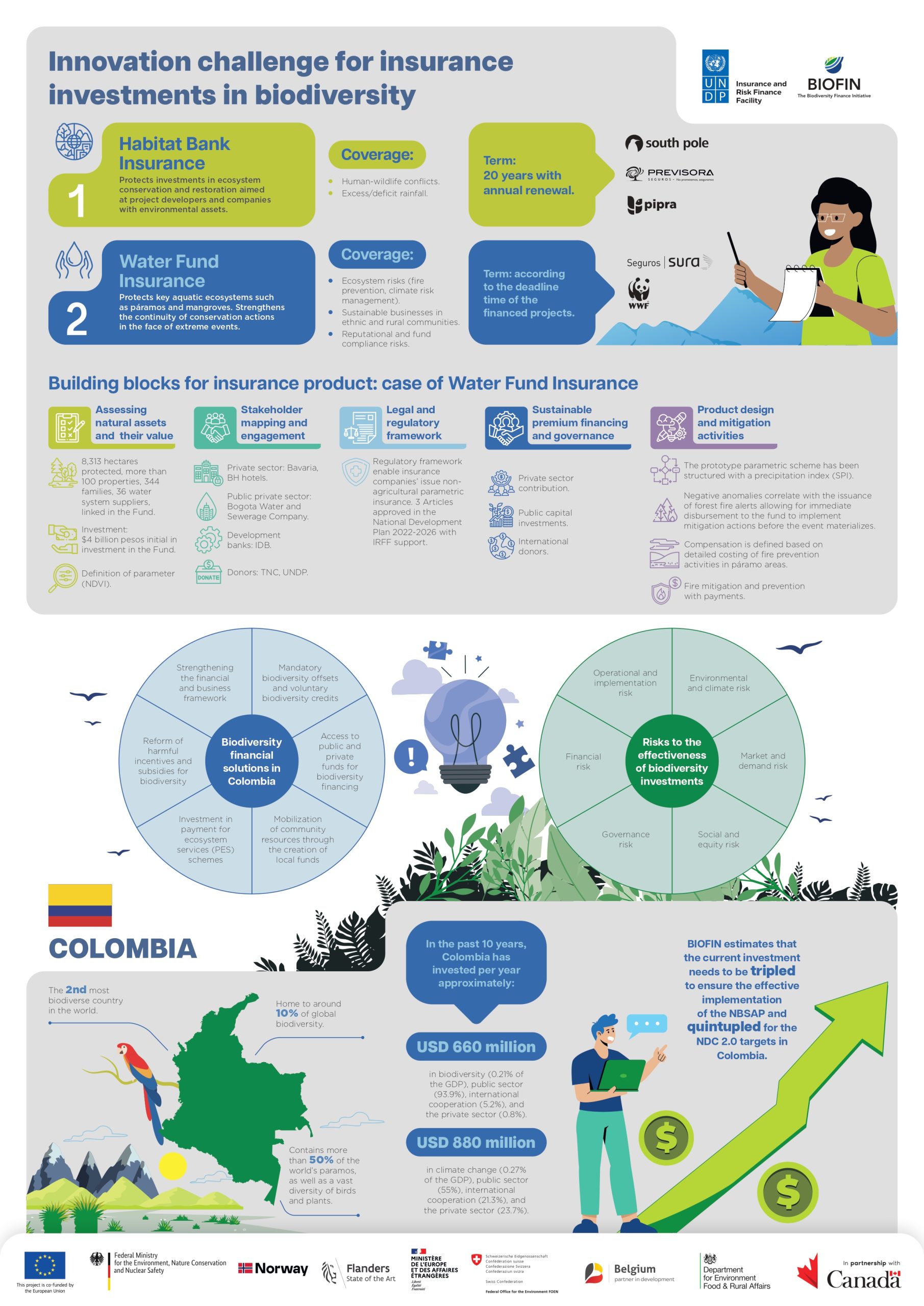
Colombia, one of the most biodiverse countries in the world, faces a significant financing gap to meet its biodiversity and climate commitments, despite allocating around USD 660 million annually. Since 2015, UNDP, through its BIOFIN initiative, has supported the promotion of innovative financial solutions such as payments for ecosystem services and access to public and private funding. In parallel, key risks affecting the effectiveness of biodiversity investments have been identified, including environmental, social, and financial risks. To mitigate these, UNDP—through BIOFIN and the Investment Risk Finance Facility (IRFF), in partnership with the Colombian Federation of Insurers and other partners such as Previsora, Suramericana, South Pole, WWF, and Pipra—has promoted the development of specialized insurance products. This insure instrument, implemented through mechanisms like Habitat Banks and the Water Fund, aim to protect investments against critical risks, foster nature-based investments, and ensure the sustainability of conservation efforts.
PUBLICATIONS
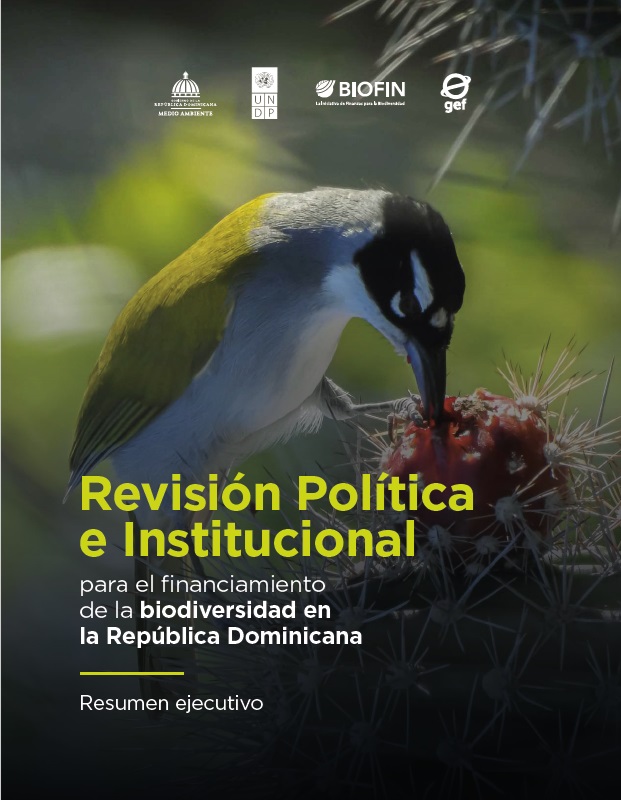
Incentives, Subsidies and Economic Instruments for Biodiversity in the Dominican Republic
Developed under BIOFIN, this study examines how existing economic incentives, subsidies, and financial instruments influence biodiversity and identifies opportunities to better align economic development with nature conservation. The assessment identifies 46 instruments with potential implications for biodiversity, including 15 that present opportunities for improvement or reform, 23 with potentially positive impacts, and eight potential public […]