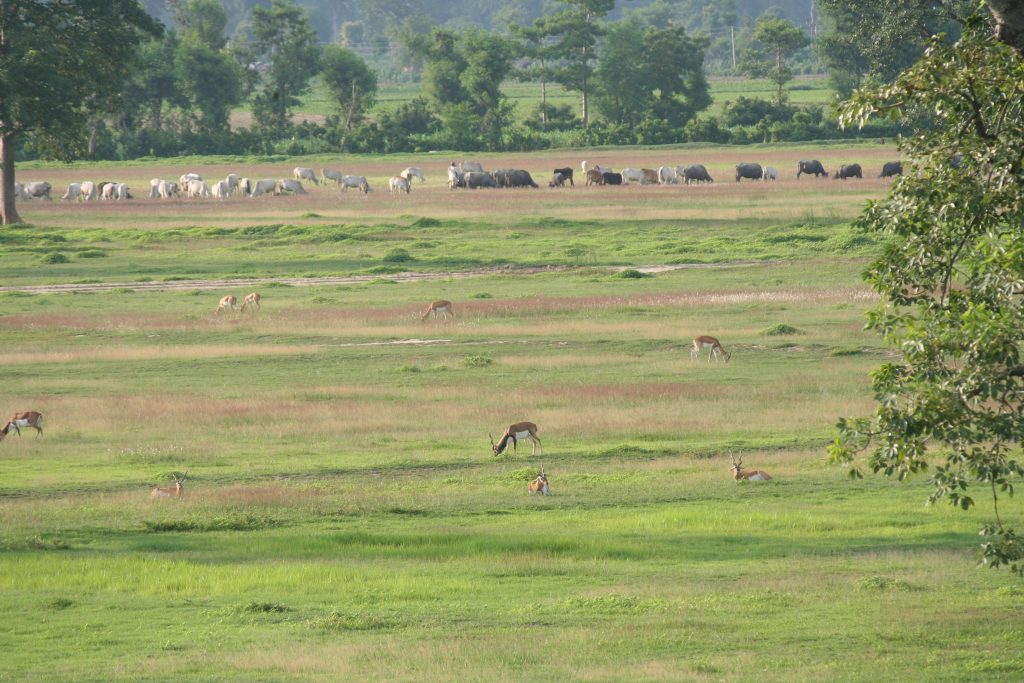
Nepal is exceptionally rich in biodiversity, shaped by dramatic variations in altitude and climate that extend from the lowland Terai to the world’s highest mountains. Its forests, grasslands, wetlands, rivers and high-mountain ecosystems provide habitat for globally important species, including tigers, greater one-horned rhinos, snow leopards, river dolphins and pangolins. These ecosystems also provide essential services for agriculture, water security, tourism and rural livelihoods, making healthy biodiversity an important foundation for Nepal’s sustainable development.

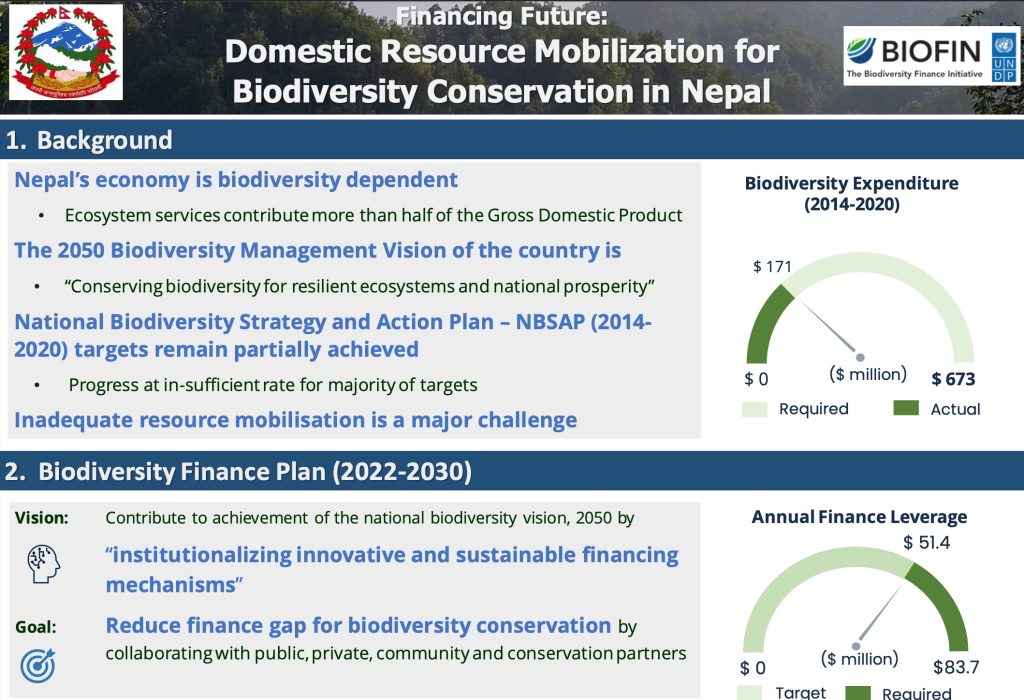
Despite strong conservation achievements and an extensive system of protected areas and community-managed forests, Nepal’s biodiversity faces growing pressures from habitat degradation, climate change, infrastructure development, unsustainable resource use and human-wildlife conflict. Financing remains a major constraint. Recent biodiversity finance analysis estimated an annual financing gap of approximately US$53.4 million, highlighting the need to mobilize additional resources while improving the effectiveness and alignment of existing financial flows.

UNDP BIOFIN has worked in Nepal since 2019 to strengthen the country’s approach to financing biodiversity. Building on assessments of biodiversity-related policies, expenditure and financing needs, Nepal developed its Biodiversity Finance Plan 2024–2030, identifying 11 priority finance solutions with the potential to catalyze approximately US$26.7 million annually for biodiversity.

Nepal is now moving from planning to implementation. UNDP BIOFIN is advancing priority solutions including insurance for human-wildlife coexistence, biodiversity-friendly community forestry and corporate social responsibility financing. These approaches are helping connect conservation with livelihoods, engage public and private actors and develop more sustainable financial mechanisms for protecting Nepal’s natural capital.

$26.7M

Annual Finance

Potential annual biodiversity finance mobilized through 11 priority finance solutions.

49th

Global Biodiversity Rank

Nepal ranks 49th globally for biodiversity richness despite its small size.

10K+

Conflict Incidents

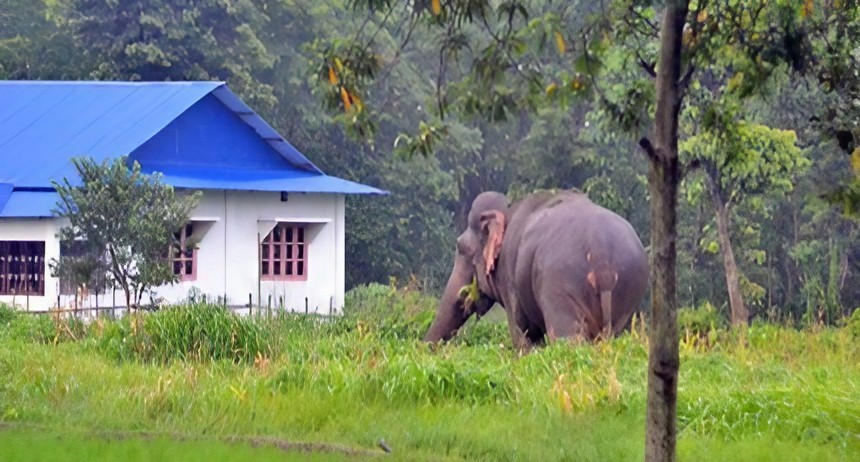
Human–wildlife conflict incidents reported annually, driving the need for innovative insurance solutions.

Finance solutions

Finance Solution 1: Wildlife Coexistence Insurance

BIOFIN Nepal has developed an innovative insurance mechanism to address human-wildlife conflict by covering crop damage, livestock losses, property damage, injuries, and fatalities caused by wildlife. The scheme helps reduce financial risks for local communities while supporting biodiversity conservation and reducing pressure on government compensation programmes. It is currently being piloted in biodiversity hotspots and is being scaled up nationally.

Finance Solution 2: Biodiversity-Friendly Community Forestry

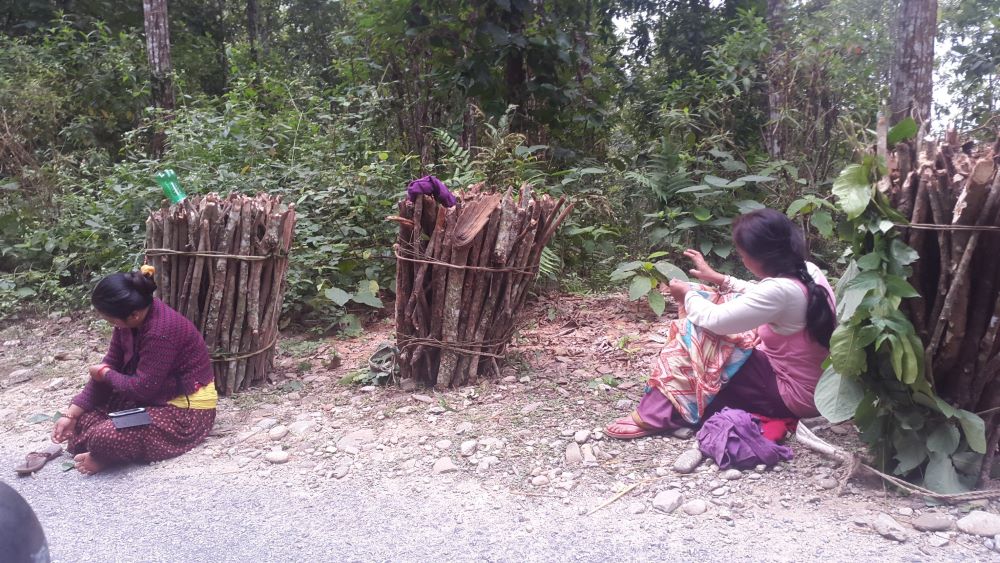
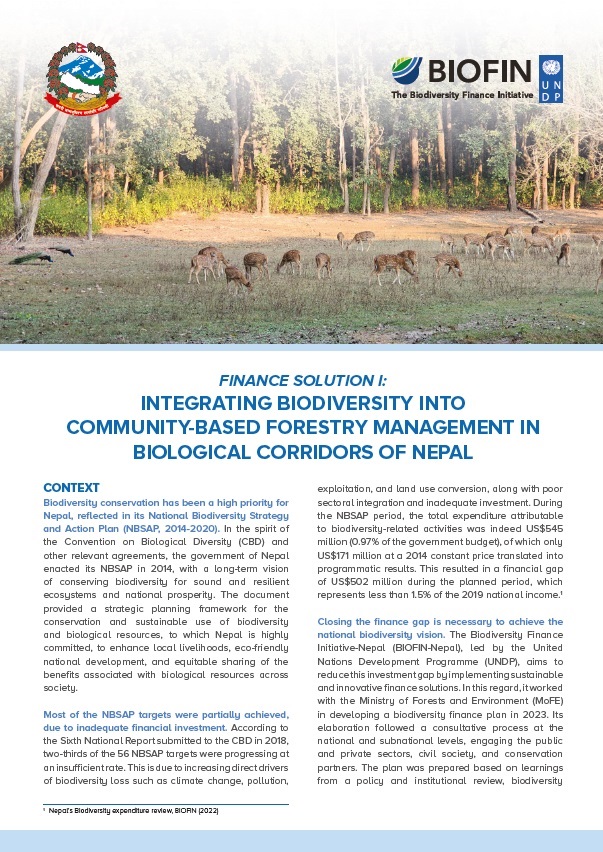
This finance solution strengthens biodiversity conservation within Nepal's community forestry system by integrating biodiversity considerations into community forest operational plans. It also improves biodiversity-related expenditure tracking, mobilizes additional finance for conservation, strengthens the capacity of forest user groups and forestry officials, and promotes active participation of local communities in forest management. A three-year pilot (2024–2027) is underway to demonstrate the approach and support its wider adoption.

Finance Solution 3: Corporate Social Responsibility (CSR) for Biodiversity

BIOFIN is working with banks, financial institutions and the private sector to channel Corporate Social Responsibility (CSR) investments towards biodiversity conservation. The initiative seeks to establish biodiversity as a priority area for private sector investment and leverage additional domestic resources through partnerships with businesses and financial institutions.

Key results

Wildlife Coexistence Insurance

UNDP BIOFIN Nepal developed what is believed to be the world's first comprehensive insurance product covering human-wildlife conflict across 18 wildlife species. The insurance covers crop losses, livestock depredation, property damage, injuries, and fatalities, helping communities better manage conservation risks while reducing pressure on government compensation schemes.

Scaling Agricultural Insurance

Building on successful pilots, BIOFIN is expanding biodiversity-linked agricultural insurance across biodiversity hotspots. Nepal records more than 10,000 human-wildlife conflict incidents each year, and the new insurance approach provides a sustainable mechanism for sharing risks between farmers, insurers, and government while supporting wildlife conservation.

Mobilizing Finance through 11 Priority Solutions

Nepal's Biodiversity Finance Plan identified 11 priority finance solutions capable of mobilizing approximately US$26.7 million annually for biodiversity conservation. Three flagship finance solutions are currently under implementation, including Wildlife Coexistence Insurance, biodiversity-friendly forestry, and corporate social responsibility (CSR) financing.

Biodiversity-Friendly Community Forestry

BIOFIN supported the development and validation of Biodiversity-Friendly Community Forestry Operational Plan Preparation Guidelines, providing a framework for integrating biodiversity conservation into community forest management and helping close the country's biodiversity finance gap.

Key documents