
NEWS
Francophone Africa Moves to Close the Biodiversity Finance Gap as the world prepares for the Biodiversity COP17
A landmark workshop will equip 24 French-speaking nations with the tools to close their biodiversity finance gap, with support from…
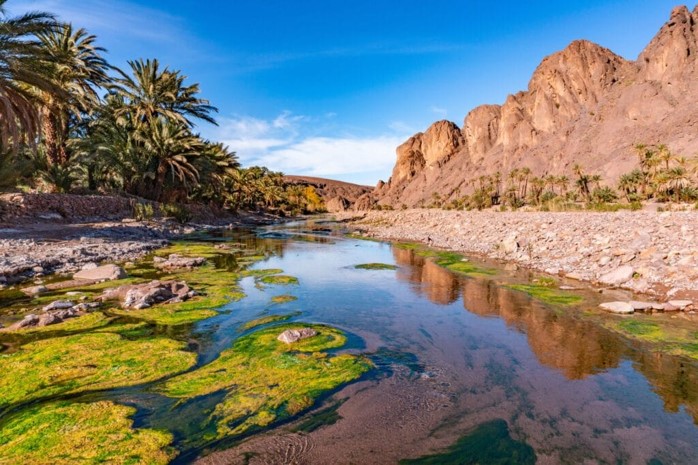
Morocco lies within the Mediterranean Basin biodiversity hotspot and is home to more than 25,000 plant and animal species, including almost 3,000 endemic species. Its biodiversity extends across the High Atlas mountains, pre-Saharan valleys and oases, argan forests, wetlands, and coastal and marine ecosystems. These natural assets support livelihoods, food security and economic development but face growing pressure from land-use change, climate change and competing demands on natural resources.
Financing remains a major constraint on biodiversity conservation. Preliminary estimates indicate that only around 15 percent of the MAD 13.35 billion required to implement the country’s 2016–2020 National Biodiversity Strategy and Action Plan was mobilized. Biodiversity financing has also remained fragmented across sectors and reliant on international support, highlighting the need for a more coordinated approach to mobilizing and managing resources.
UNDP BIOFIN was launched in Morocco in January 2024 under the leadership of the Ministry of Energy Transition and Sustainable Development, with support from UNDP and the engagement of the Ministry of Economy and Finance. It brings together government institutions, national agencies, academia, civil society and the financial sector to strengthen biodiversity finance planning.
Using the UNDP BIOFIN methodology, Morocco is conducting a Policy and Institutional Review, Biodiversity Expenditure Review and Financial Needs Assessment. These analyses will inform the country’s first National Biodiversity Finance Plan, which will identify practical solutions to improve existing expenditure, address finance that harms nature and mobilize additional public and private investment for the implementation of national biodiversity priorities and the Kunming–Montreal Global Biodiversity Framework.
1. Nature-related financial risk and disclosure framework
This solution would develop a national reference framework to help financial institutions and businesses identify, assess and disclose their nature-related dependencies, impacts, risks and opportunities. It would support the integration of nature into financial and economic decision-making and align national practices with the recommendations of the Taskforce on Nature-related Financial Disclosures and the Kunming–Montreal Global Biodiversity Framework.
Stage: Design; project proposal developed and submitted for funding
Potential lead institutions and partners: Bank Al-Maghrib, the International Climate Initiative and UNDP BIOFIN.
2. Green credit lines and biodiversity bonds
Green credit lines and biodiversity bonds could mobilize finance from banks and capital markets for investments that deliver positive outcomes for nature. Potential areas include agroecology, nature-based solutions and the restoration of forests, wetlands and coastal ecosystems.
Stage: Design; initial discussions launched with the European Union
Potential lead institutions and partners: European Union, Ministry of Energy Transition and Sustainable Development and UNDP.
3. National biodiversity taxonomy
A national biodiversity taxonomy would establish criteria for identifying and classifying biodiversity-positive economic activities and investments. It could improve the transparency and traceability of financial flows, guide investors and help align Morocco’s financial system with international sustainable-finance standards.
Stage: Design; initial discussions launched with the European Union
Potential lead institutions and partners: European Union, Ministry of Energy Transition and Sustainable Development and UNDP.
4. Reform of harmful subsidies and green budget tagging
The Biodiversity Expenditure Review identified approximately MAD 13.07 billion in direct subsidies that may negatively affect biodiversity. This solution would explore environmental conditions for public support, the gradual reform or redirection of harmful incentives, and the introduction of green budget tagging to improve the transparency and alignment of public expenditure with biodiversity priorities.
Stage: Concept; identified through the Biodiversity Expenditure Review and prioritized for early consideration
Potential lead institutions and partners: Ministry of Economy and Finance and Ministry of Energy Transition and Sustainable Development.
Between July 2025 and June 2026, Morocco completed foundational biodiversity finance assessments, advanced partnerships for potential finance solutions and strengthened regional knowledge exchange.
1. Policy and Institutional Review completed
The review assessed Morocco’s biodiversity finance policies, institutions and governance arrangements. It highlighted strengths, including ambitious national strategies and growing institutional engagement, while identifying fragmented interventions, limited coordination among sectors, and legal and regulatory constraints. It also proposed priority actions to strengthen governance, integrate biodiversity into sectoral policies and develop finance solutions suited to the national context.
2. Biodiversity expenditure assessed
The Biodiversity Expenditure Review mapped and quantified public and private financial flows supporting biodiversity. It found that public biodiversity expenditure averaged approximately MAD 2.06 billion annually, equivalent to around 0.16 percent of GDP. Expenditure exceeded MAD 3 billion in 2019 before declining to MAD 1.36 billion in 2024.
The review also identified approximately MAD 13.07 billion in direct subsidies that may negatively affect biodiversity. This figure is considered conservative because of limitations in the availability and traceability of financial data.
3. Future financing scenarios developed
Three biodiversity expenditure scenarios to 2035 were modelled to support planning and policy dialogue:
These scenarios provide an evidence base for discussing how Morocco could establish more stable and adequate financing for biodiversity.
4. Partnerships for early finance solutions advanced
Morocco initiated collaboration with Bank Al-Maghrib on a proposed nature-related financial risk and disclosure initiative. Discussions were also launched with the European Union on potential green credit lines, biodiversity bonds and a national biodiversity taxonomy. These partnerships are expected to inform the development and prioritization of finance solutions under the National Biodiversity Finance Plan.
5. Regional knowledge exchange strengthened
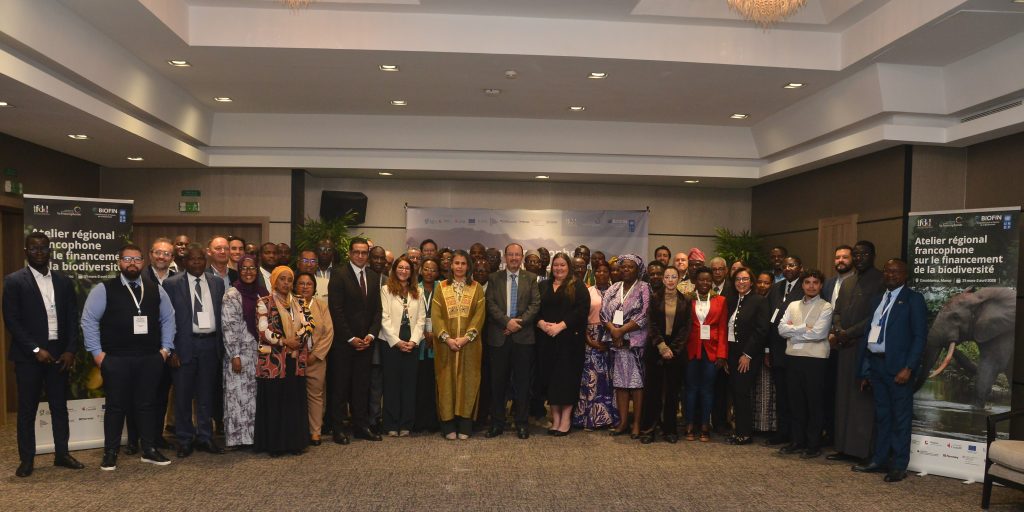
Morocco hosted the Regional Francophone Workshop on Biodiversity Finance in Casablanca from 31 March to 2 April 2026. Co-organized with UNDP BIOFIN, the Institut de la Francophonie pour le développement durable and the Global Environment Facility, the workshop brought together representatives from 24 French-speaking countries to strengthen technical capacity and exchange experience in developing Biodiversity Finance Plans.
6. Strong participation by women
Women accounted for 59 percent of the 95 direct participants reached through project events during the reporting period. They represented 58 percent of participants at the launch workshop and 60 percent of participants in consultation meetings.
These results provide the analytical and institutional foundation for Morocco’s forthcoming Financial Needs Assessment and National Biodiversity Finance Plan, which will identify and prioritize practical approaches to mobilizing and improving finance for biodiversity.