
Despite the extremely challenging conditions caused by the war, Ukraine continues to fulfil its international commitments in the field of biodiversity conservation
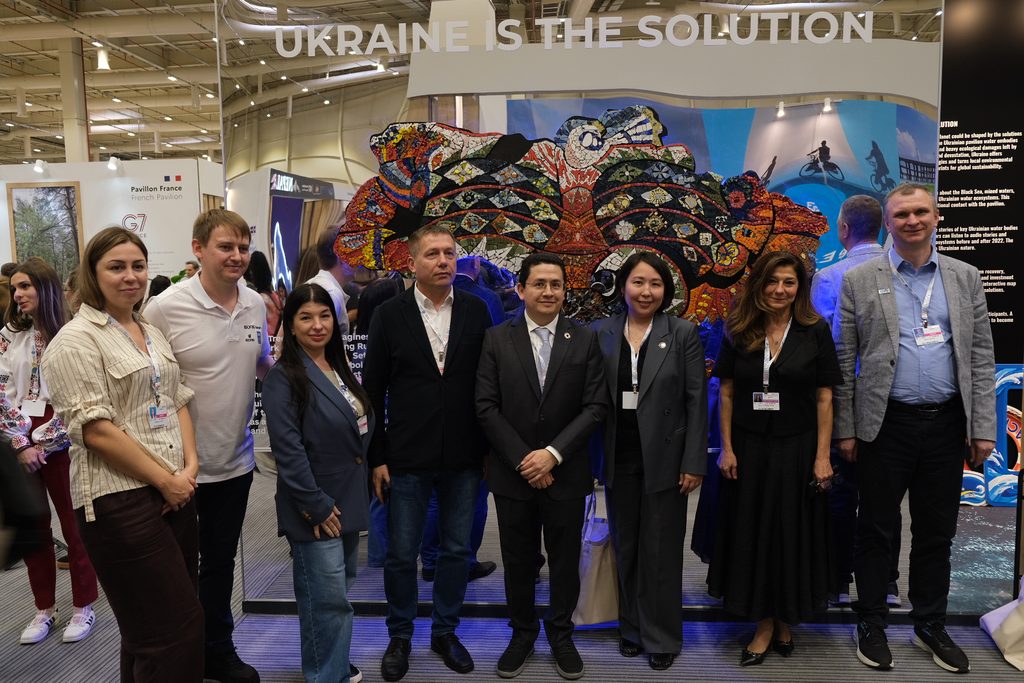
Biodiversity finance must become an integral part of Ukraine’s recovery and reconstruction efforts, with sustainable investments in nature helping to restore ecosystems, strengthen climate resilience and support long-term development. This was the central message of a panel discussion organised by UNDP Ukraine under the Biodiversity Finance Initiative (BIOFIN) at the UN Climate Change Conference COP31 in Antalya.
The event, “Biodiversity Finance for a Green Recovery: Lessons from UNDP-BIOFIN Countries for Ukraine”, brought together government officials, international donors, and global experts to map out sustainable financing pathways under severe fiscal pressures.
The war has caused enormous damage to Ukraine’s natural ecosystems and biodiversity. According to available estimates, hostilities have already affected more than 30% of the country’s protected areas.
Despite the extremely challenging conditions caused by the war, Ukraine continues to fulfil its international commitments in the field of biodiversity conservation. An important step was the adoption of Ukraine’s National Biodiversity Conservation Strategy and Action Plan through 2035. This demonstrates that the conservation of the country’s natural heritage remains a national priority and an integral part of Ukraine’s future green recovery.
“Protecting Ukraine’s natural heritage is a government priority and an essential part of our green recovery. Public funding alone cannot meet the scale of the challenge, making continued support from international partners, financial institutions and the private sector crucial. We see BIOFIN as an important instrument for translating our biodiversity commitments into concrete financial solutions and investments,” said Oleksandr Krasnolutskyi, Deputy Minister of Economy and Environment of Ukraine, in his opening remarks.
“While Ukraine’s context is unique, UNDP-BIOFIN’s flexible approach allows us to identify solutions tailored to the country’s specific needs and circumstances. There is also an opportunity to link financing for protected areas more closely with Ukraine’s broader recovery priorities. Investments in ecosystem restoration, watershed management and nature-based solutions can advance biodiversity conservation while strengthening resilience and supporting sustainable reconstruction,” Martin Cadena, Global Programme Manager of UNDP’s Biodiversity Finance Initiative (BIOFIN), mentioned in his intervention.
Moderated by Oleg Kirichuk, UNDP-BIOFIN National Coordinator in Ukraine, the discussion explored how biodiversity finance can become an integral part of national development and recovery planning, as highlighted by Gulbahar Abdurasulova, Policy Officer for Biodiversity Finance at Germany’s Federal Ministry for the Environment, Nature Conservation, Nuclear Safety and Consumer Protection.
Serhiy Lyashok, Head of the Department of Natural Resource Expenditures and Environmental Safety at Ukraine’s Ministry of Finance, emphasized the importance of integrating biodiversity financing needs into national and local budget planning.
Experiences shared by Burcu Guvenek Arasli, UNDP-BIOFIN National Coordinator in Türkiye, and Alua Baizhomartova, Programme Analyst at UNDP Kazakhstan, offered further insights into strengthening the financial sustainability of protected areas, improving public financing arrangements, diversifying revenue streams and mobilizing private-sector investment. Kazakhstan’s experience was particularly noteworthy: between 2018 and 2025, the country tripled its protected area budgets, alongside reforms to strengthen financing arrangements.
The COP31 discussion reinforced a shared priority: ensuring that biodiversity conservation is recognised as an investment in Ukraine’s recovery, resilience and long-term prosperity, backed by strong partnerships and sustainable financing.
Additional information
BIOFIN launched in Ukraine in 2026 with the support of the Government of Germany and in partnership with the Ministry of Economy and Environment of Ukraine. The programme is already moving from analysis towards implementation. BIOFIN is conducting a Policy and Institutional Review, Biodiversity Expenditure Review and Financial Needs Assessment, which will inform Ukraine’s first Biodiversity Finance Plan.
At the same time, BIOFIN is developing and implementing practical finance solutions. The first solution focuses on strengthening the financial sustainability of Ukraine’s protected areas by modernizing fee-based services, improving pricing methodologies and financial planning, diversifying revenue streams, and strengthening the capacity of protected areas to retain and reinvest revenues. 3 national parks, Podilski Tovtry, Holosiivskyi and Kuyalnytskyi, will serve as pilots for this approach.