
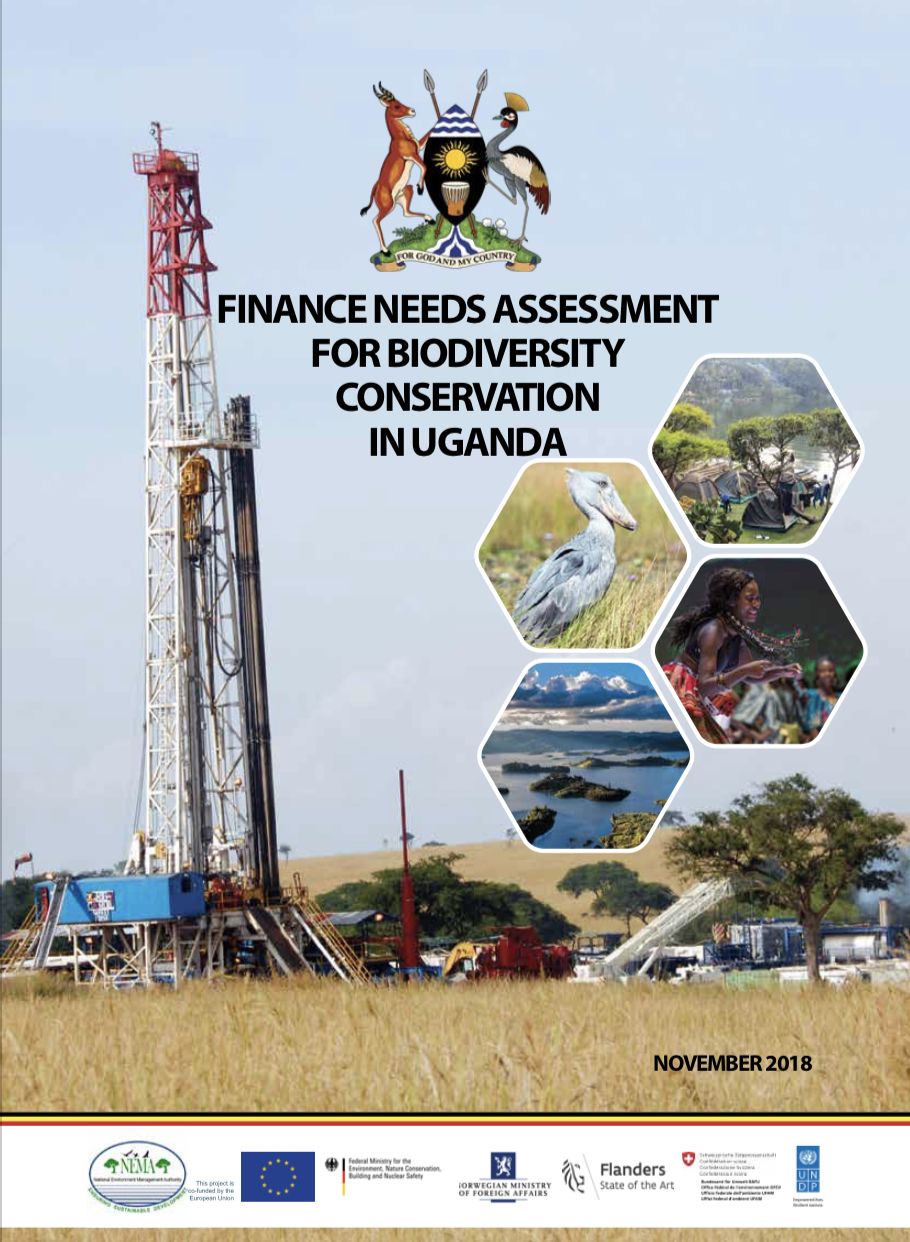
The Financial needs Assessment present the detailed costing of the NBSAP (2018-2025). The total cost of the implementation of the NBSAP was estimated at UGBX 2,859.9 billion on average, Uganda required about UGX 472.6 billion for biodiversity conservation and management per fiscal year. Furthermore, about 96.6% of the total cost of implementation of the NBSAP II are to implement the objective 3; these costs are related to the restoration of forests and wetlands. The main drivers of habitat loss in forest and wetlands areas are demand for biomass fuel and land for agricultural production respectively. It should be noted that cost of habitat restoration might not be the best strategies if the root cause of forest and wetland degradation are not addressed. Further analysis revealed that only about 0.5% of the total costs of implementation of the NBSAP are capital development costs while the remaining is for recurrent costs. The high proportion of the recurrent costs are attributed to restoration of forests and fragile ecosystems that are spread out till 2024/25.
PUBLICATIONS
Finance for Finance
Investment opportunities from national Biodiversity Finance Plans