
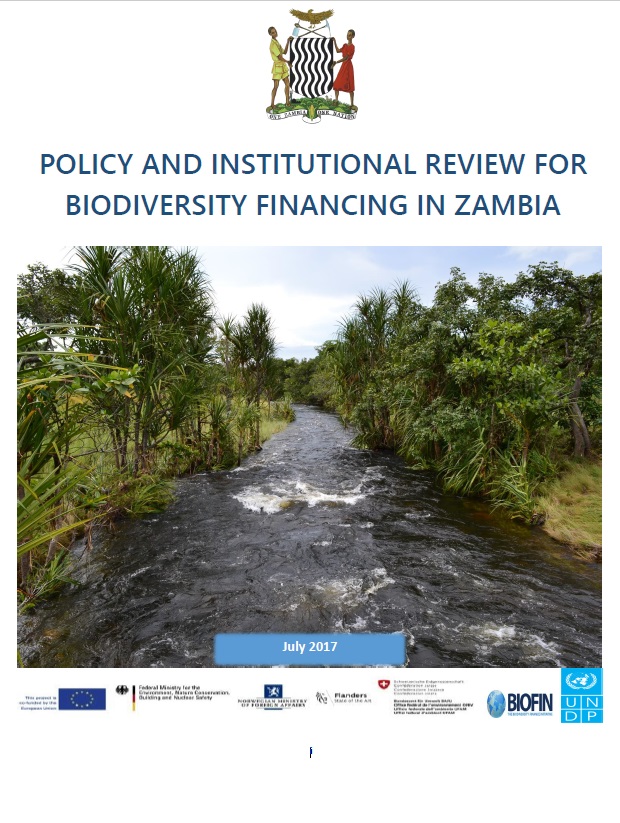
This publication presents Zambia’s Policy and Institutional Review (PIR) of biodiversity financing, examining the policy, legal, and institutional frameworks that underpin investments in biodiversity conservation. While Zambia is richly endowed with biodiversity that supports livelihoods, ecosystem services, and socio-economic development, growing pressures on forests, wildlife, fisheries, and other natural resources highlight significant financing gaps. The review assesses past and current biodiversity expenditures, identifies resource constraints, and outlines opportunities to strengthen financing mechanisms. It also proposes sector-specific finance solutions across agriculture, environment, forestry, fisheries, water, and wildlife, aligned with the National Biodiversity Strategy and Action Plan (2015–2025) and the Seventh National Development Plan, to support more effective and sustainable biodiversity conservation.
PUBLICATIONS
Finance for Finance
Investment opportunities from national Biodiversity Finance Plans