
Biodiversity loss is accelerating due to human activities, posing serious risks to ecosystems, economies, and societies. Adopted in 2022, the Kunming-Montreal Global Biodiversity Framework sets ambitious targets to halt and reverse nature loss by 2030, calling for coordinated action across all sectors. As public finance alone is insufficient, greater private sector engagement is critical. Businesses and financial institutions are increasingly expected to adopt nature-positive practices, assess and disclose nature-related risks, and align financial decision-making with global standards such as Taskforce on Nature-related Financial Disclosures, International Sustainability Standards Board, the Global Reporting Initiative, and the Corporate Sustainability Reporting Directive, responding also to growing consumer demand for sustainable and responsible practices.
PUBLICATIONS
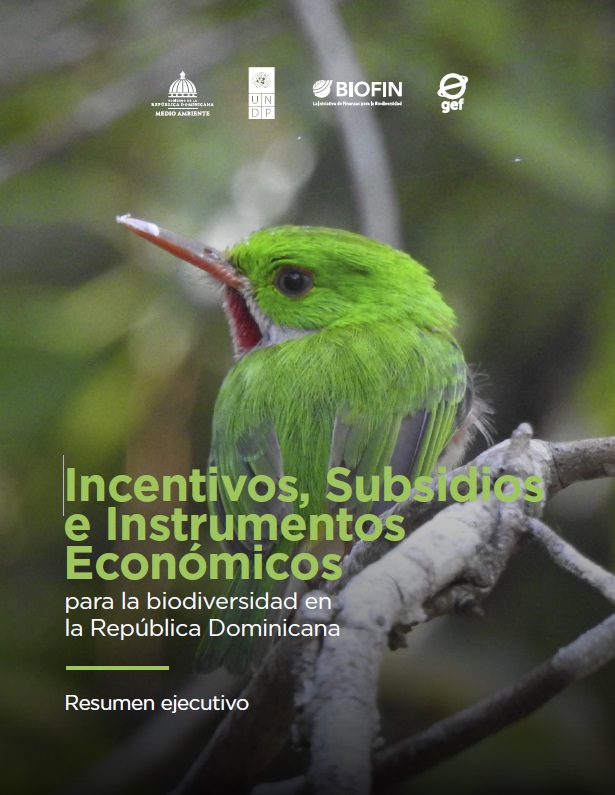
Incentives, Subsidies and Economic Instruments for Biodiversity in the Dominican Republic
Developed under BIOFIN, this study examines how existing economic incentives, subsidies, and financial instruments influence biodiversity and identifies opportunities to better align economic development with nature conservation. The assessment identifies 46 instruments with potential implications for biodiversity, including 15 that present opportunities for improvement or reform, 23 with potentially positive impacts, and eight potential public […]