
Namibia’s Biodiversity Finance Policy and Institutional Review (PIR) provides a baseline assessment of the country’s biodiversity finance landscape, policies and institutions. It highlights Namibia’s strong conservation framework and community-based achievements, while identifying financing gaps, fragmented coordination, reliance on donor funding and limited private-sector participation. The review also outlines opportunities to scale up finance through mechanisms such as payments for ecosystem services, biodiversity offsets, green bonds and eco-labelling.
PUBLICATIONS
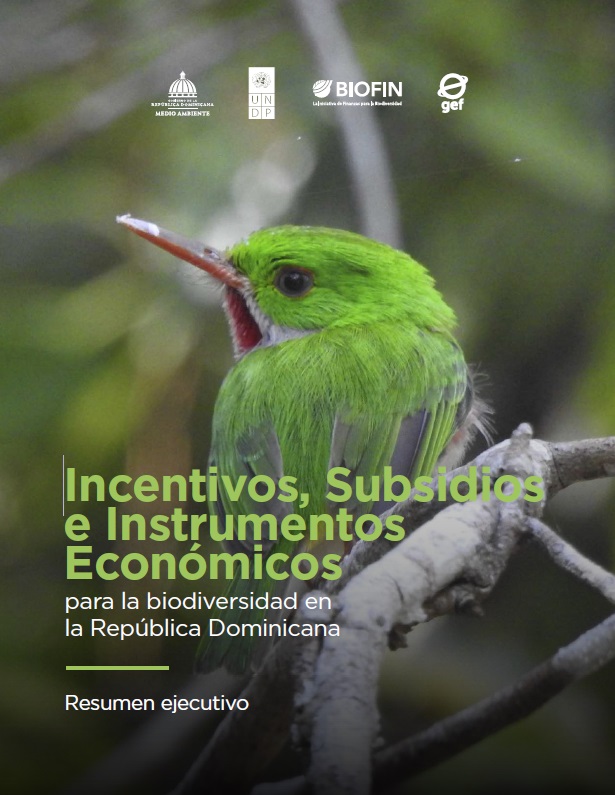
Incentives, Subsidies and Economic Instruments for Biodiversity in the Dominican Republic
Developed under BIOFIN, this study examines how existing economic incentives, subsidies, and financial instruments influence biodiversity and identifies opportunities to better align economic development with nature conservation. The assessment identifies 46 instruments with potential implications for biodiversity, including 15 that present opportunities for improvement or reform, 23 with potentially positive impacts, and eight potential public […]