

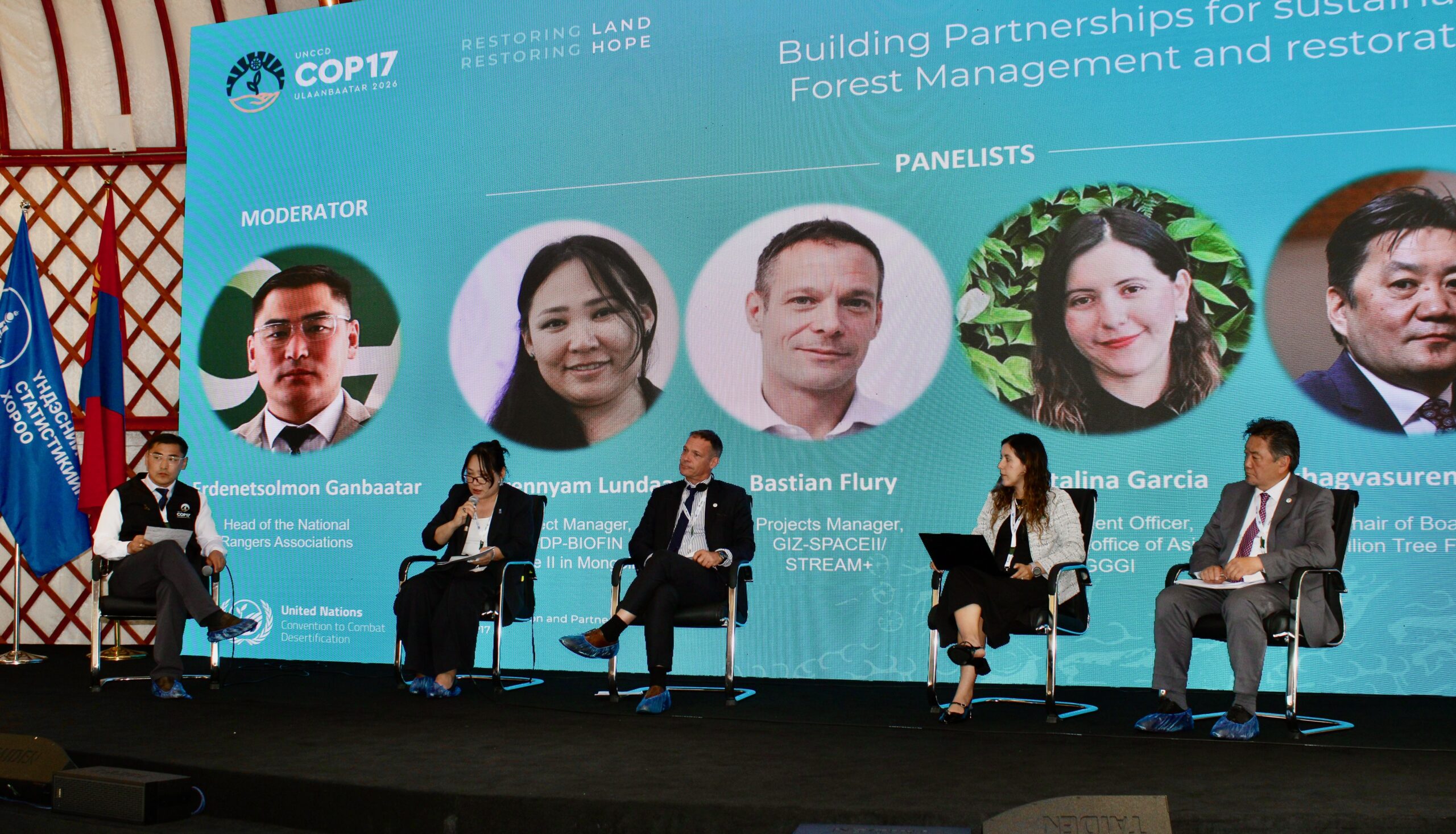
At UNCCD COP17 in Ulaanbaatar, Mongolia, the UNDP BIOFIN national team presented reforms designed to mobilize investment, address financial flows that harm nature, and strengthen funding for biodiversity.
Mongolia will need an estimated MNT 2.8 trillion, approximately US$780 million, to implement its recently approved National Biodiversity Strategy and Action Plan (NBSAP) for 2026–2030.
This represents approximately 0.5–0.7 percent of the country’s gross domestic product annually. With its significant portion of the required finance expected to come from private, as well as international finance mechanisms, Mongolia’s biodiversity ambitions cannot be financed through the state budget alone.
During the 17th Conference of the Parties to the United Nations Convention to Combat Desertification (UNCCD COP17), held in Ulaanbaatar from 17 to 28 August 2026, the Ministry of Environment and Climate Change (MECC) and UNDP Mongolia presented how the country is addressing this challenge.
The discussions demonstrated the strong interconnections between biodiversity, land, water and finance in Mongolia. They also highlighted BIOFIN Mongolia’s financing framework and its three priority areas of implementation: improving public finance and expenditure, increasing private financial flows, and reforming subsidies that are harmful to biodiversity.
Financing Mongolia’s biodiversity commitments
Mongolia officially launched its NBSAP 2026–2030 on 18 August during UNCCD COP17. Following the presentation of the strategy by the MECC and the UNDP-supported NBSAP project, the national team of the Biodiversity Finance Initiative (BIOFIN) presented the estimated total financing needs for its implementation, along with the biodiversity finance solutions currently being implemented to translate the strategy into action.
The assessments showed that implementing the strategy will require both an increase in biodiversity-positive investment and a reduction in public and private financial flows that negatively affect nature.
BIOFIN in Mongolia is currently implementing six priority finance solutions for mobilizing and using finance more effectively:
- Enforcement of the implementation of the Natural Resource Use Fees Law;
- Strengthening the Billion Tree Fund to attract private investment in nature-based solutions;
- Reforming subsidies harmful to biodiversity;
- Supporting the private sector’s early adoption of nature-related financial disclosures;
- Introducing results-based management for national and subnational environmental governance; and
- Improving entrance fees and other visitor-related charges for protected areas.
Several of these solutions were consequently discussed during BIOFIN-supported Blue- and Green Zone side events at COP17.
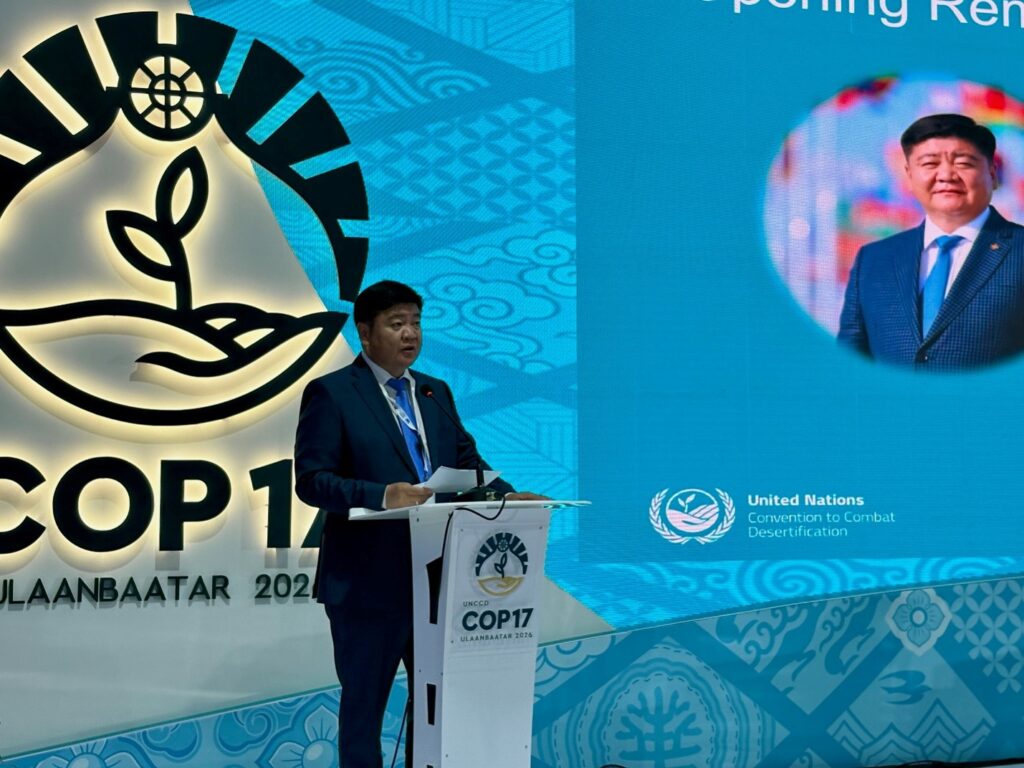
“The Government of Mongolia is working consistently to expand public-private partnerships in the conservation sector, increase green investment and develop innovative financing mechanisms,” said Ts. Sandag-Ochir, Minister of Environment and Climate Change. “We do not view biodiversity conservation as a cost—we see it as a foundational investment in sustainable development and a responsibility we owe to future generations,” he added.
Building on higher natural resource revenues
Mongolia’s efforts to finance biodiversity are already producing measurable results.
Since 2016, UNDP BIOFIN has supported the Government in strengthening implementation of the Natural Resource Use Fees Law, Based on the user-pays principle, the Law requires local governments to allocate a certain share of revenues collected from the use of forests, water, plants, wildlife, and land to environmental protection, conservation, and natural resource rehabilitation measures, thereby helping to maintain ecosystem integrity and ensure the sustainable use of natural resources.
The overall rate of implementation rose from an average baseline of 34 percent during 2016-2021 to a peak of 64 percent in 2024. By the end of 2025, the cumulative additional funding leveraged for environmental protection had reached approximately USD 28 million.
Government budgets approved by the Ministry of Finance for environmental protection and natural resource rehabilitation have also increased significantly, rising close to threefold since 2020.
The next challenge is to ensure that this growing finance delivers demonstrable results for nature and communities. UNDP BIOFIN and its partners therefore plan to bring revenue, budget-allocation and expenditure data together through a digital monitoring system. Mongolia also intends to introduce results-based management to improve how environmental funding is planned, spent and assessed.
Reforming financial flows that harm nature
One of the discussions focused on how the pricing of water can influence its use and conservation.
During a session co-organized by the Ministry of Environment and Climate Change, the National Water Agency, and UNDP-BIOFIN on 25 August, participants examined how underpriced water and fee reductions or exemptions granted without clear eligibility criteria, ecological safeguards, or adequate assessment of biodiversity impacts may function as implicit subsidies. Such arrangements can encourage inefficient water use and over-extraction while weakening incentives to invest in water-saving technologies.
Mongolia’s ecological-economic valuation of water has not been updated since 2011 or subsequently adjusted for inflation. Consequently, current charges may not reflect water’s increasing scarcity or ecological value, particularly in groundwater-dependent regions such as the Gobi, where water resources face growing pressure from mining, urbanization and climate change. Outdated water-use norms and fee reductions or exemptions granted without clear eligibility criteria, environmental safeguards, or adequate assessment of biodiversity impacts may function as implicit subsidies, encouraging inefficient water use, over-extraction, and delayed investment in water-saving technologies.
Reform should therefore be implemented through a clearly defined, evidence-based phased approach: first, by updating the ecological-economic valuation and modernizing water-use norms; second, by assessing the social, economic, fiscal, and biodiversity impacts of proposed changes and reviewing existing exemptions and reductions; and third, by gradually introducing revised fees and safeguards through stakeholder consultation, transparent public communication, and ongoing monitoring.
This phased approach will help protect ecosystems and water security while maintaining affordability, economic competitiveness, and a just transition for affected communities and sectors.
Strengthening the Billion Tree Fund
Addressing this issue would also support Mongolia’s implementation of Target 18 of the Kunming-Montreal Global Biodiversity Framework, which calls on countries to identify and reform incentives, including subsidies, that are harmful to biodiversity. Reforming biodiversity-negative financial flows is also included in Mongolia’s NBSAP as a national commitment for 2030.
Rethinking Public Support for Land and Nature
Several discussions at UNCCD COP17 examined the impacts of public support measures on land and biodiversity. Mongolia’s experience was presented at two events: the launch of its National Biodiversity Strategy and Action Plan in the Green Zone, co-organized by the Ministry of Environment and Climate Change and UNDP; and a high-level panel convened in the Blue Zone as part of Food Systems and Soil Health Day, co-hosted by the UNCCD secretariat, Clim-Eat, IFAD, WWF and the Agroecology Coalition. The Blue Zone panel considered how agricultural support could be redirected to advance resilient and economically viable food systems while safeguarding soil health, land and biodiversity.
Public support for agriculture is a powerful policy instrument. However, globally, less than 5 percent of such support is directed towards conservation or other public goods, while poorly designed measures may contribute to land degradation, soil depletion and rural poverty. Understanding of the different forms of public support, and their potential impacts on nature and land, also varies considerably. Many stakeholders perceive public support primarily as direct financial transfers, with less recognition of indirect measures. A perception survey conducted among stakeholders in Mongolia highlighted these knowledge gaps: 42 per cent of government respondents could not clearly identify the different forms of public support that may adversely affect nature and contribute to land degradation, 58 per cent had limited knowledge of methods for assessing environmental impacts, and 44 per cent could not identify practical options for reform.
Reform should therefore begin by building a shared understanding of what constitutes public support and how different measures may affect nature and land. Mongolia could assess existing measures, reform those that may have adverse environmental impacts, and pilot incentives that deliver positive environmental outcomes. Successful approaches could subsequently be scaled up through the Steppe Action Agenda, a key policy legacy of UNCCD COP17. Such reform is not only a technical undertaking but also a matter of equity, ensuring that public finance supports the people and communities who manage the land while advancing healthier ecosystems, food security, climate resilience and more productive agricultural systems.
Strengthening the Billion Tree Fund to support private sector investment in nature-based solutions
Mobilizing private and international capital will also require institutions capable of managing finance transparently and effectively.
During COP17, UNDP BIOFIN highlighted its collaboration with the Billion Tree Fund, one of the financing vehicle supporting Mongolia’s Billion Trees National Movement. The partnership aims to strengthen the Fund’s governance, environmental and social safeguards, and investment policies in line with international good practices for conservation trust funds.
Strong governance and accountability can give public institutions, development partners and private investors greater confidence that funds will be managed effectively and deliver measurable environmental results.
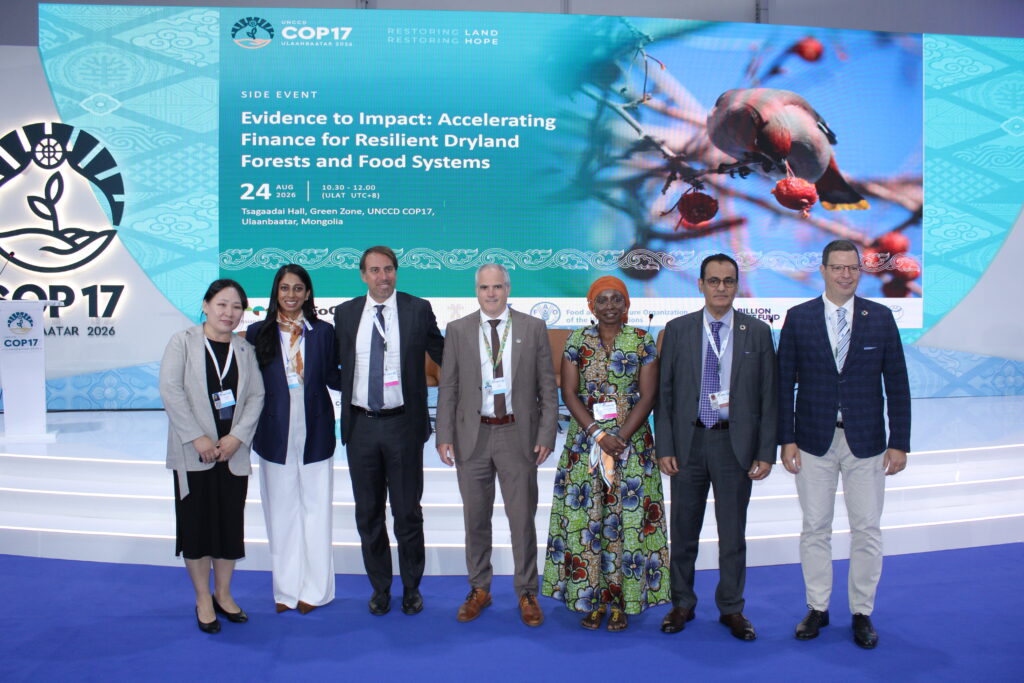
The cooperation was presented at several COP17 events, including a forest-investment event in the Blue Zone on 21 August, a Finance Day session on drylands on 24 August and a joint Billion Tree Fund–BIOFIN pavilion session.
A stronger institutional foundation could eventually help Mongolia explore a wider range of financing instruments, including non-timber revenue, green bonds, carbon markets, biodiversity credits and debt-for-nature mechanisms. Each instrument requires careful assessment and appropriate safeguards, but strengthening the Fund’s governance is an important step towards attracting and managing additional investment.
From planning to implementation
Mongolia used UNCCD COP17 not only to present the cost of its biodiversity commitments, but also to demonstrate how it is supporting to build the systems required to finance them.
The country is strengthening the environmental expenditures from the local budgets, examining financial incentives that contribute to environmental pressure and improving the governance of an institution intended to attract investment for nature-based solutions.
Together, these reforms show that financing an NBSAP is not solely about identifying additional funding. It also means improving how existing public finance is collected and used, redirecting financial flows that potentially work against nature, and establishing credible institutions through which new investment can be mobilized.
With the NBSAP now approved and its financing requirements identified, Mongolia’s next task is to translate these reforms into sustained investment and measurable results for its biodiversity, land, water and people.