

Finance and environment ministries, development banks, financial institutions and communities from 25 countries meet in Quito to expand public, private and community finance for nature ahead of the UN Biodiversity Conference in Armenia.
Quito, Ecuador, 1 September 2026 — Latin America and the Caribbean are at the forefront of efforts to make public finance work more effectively for nature. Across the region, governments are reshaping existing public spending, including environmentally harmful subsidies, while designing new incentives that support nature-positive investments in agriculture, green enterprises and biodiversity conservation.
Together with other public and private finance solutions, these efforts have unlocked nearly US$2 billion for nature across Latin America and the Caribbean since 2018, over half of the more than US$3.3 billion unlocked globally through UNDP BIOFIN-supported finance solutions over the same period.
UNDP’s Biodiversity Finance Initiative (BIOFIN) works with governments and partners across more than 135 countries to connect national biodiversity priorities with practical financing solutions. These finance and policy results are anchored in national Biodiversity Finance Plans, which help countries improve public spending, redesign financial incentives, engage private investors and develop innovative finance solutions. This work can also help countries benefit from a nature-positive economy that could generate US$10 trillion in annual business opportunities and 395 million jobs globally by 2030.
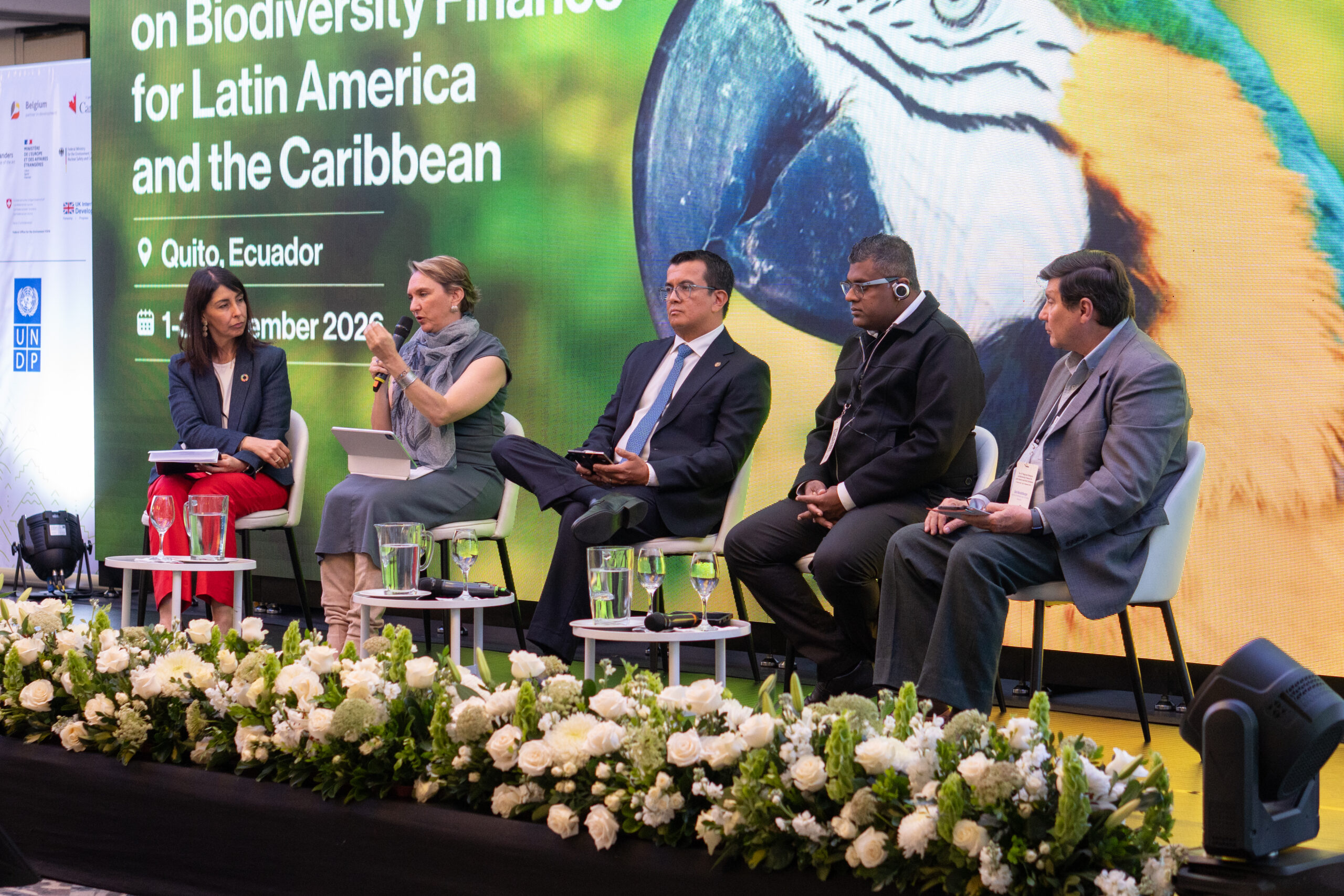
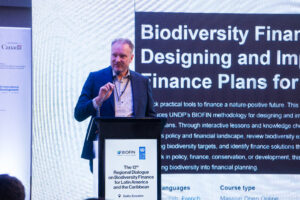
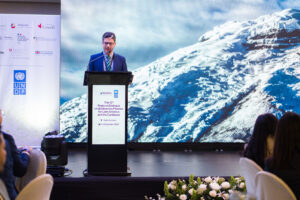
These questions are at the heart of the 12th Regional Dialogue on Biodiversity Finance for Latin America and the Caribbean, which opened in Quito with representatives from 25 countries. The Dialogue brings together ministries of finance and environment, development banks, private financial institutions, conservation organizations, communities and development partners to mobilize finance for national biodiversity priorities.
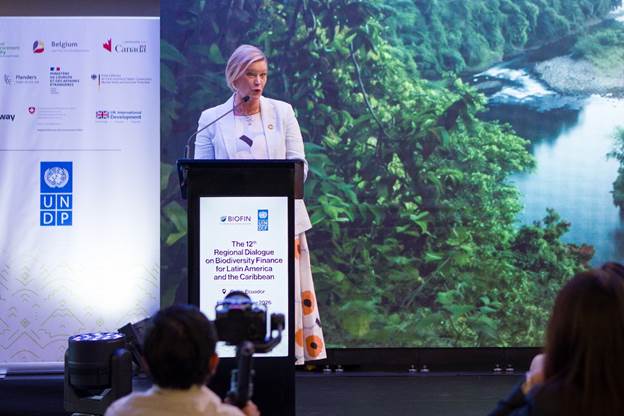
“Ecuador reaffirms that protecting biodiversity cannot be an isolated effort. It requires a modern, bold and committed financial framework in which public resources, development banks and the private sector collaborate towards shared national and regional objectives. Conservation is not an expense, but rather the most profitable strategic investment for ensuring the well-being of present and future generations,” – Alicia Jaramillo Cabo, Vice-minister of Environment and Coastal-Marine, Ministry of Environment and Energy of Ecuador.
Latin America and the Caribbean contain some of the world’s most biodiverse ecosystems. These ecosystems support food and water security, livelihoods, tourism, climate resilience, and economic development. Yet protecting and restoring them requires sustained finance and stronger integration of biodiversity into economic and financial decisions.
Biodiversity Finance Plans help governments understand how much they currently spend on biodiversity, estimate future financing needs and identify practical solutions to mobilize new resources, improve existing spending and reduce financial flows that harm nature.
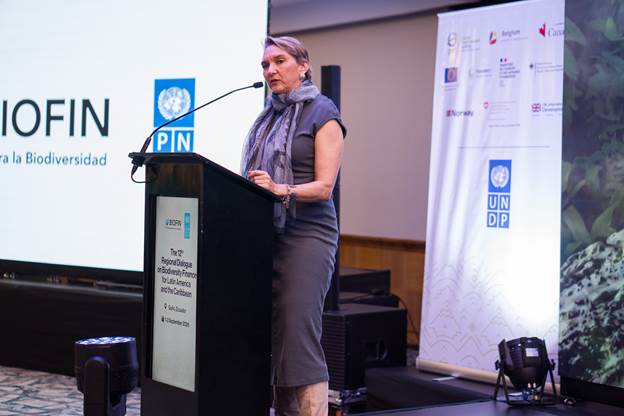
“Climate change, biodiversity loss and land degradation are not separate environmental challenges—they shape our economies, security and development,” said Inka Mattila, UNDP Resident Representative in Ecuador. “This Dialogue is about turning that shared challenge into investable solutions that can drive growth, equity and resilience across the region,” she said.
Finance solutions delivering results across the region
Recent results demonstrate the growing diversity and scale of biodiversity finance solutions across the region.
In Colombia, more than US$553 million was unlocked through the Fund for Life and Biodiversity and other public finance instruments.
Costa Rica mobilized, catalysed and aligned US$101.5 million, with more than 52 percent directed towards initiatives led by women. One of its newest initiatives, Naturalia, connects community-based rural tourism and agrotourism with conservation in biological corridors. It has mobilized US$3.9 million, supported 3,733 people, 54 percent of them women, and contributed to the sustainable management of 3,310 hectares of forest.
In Ecuador, environmental and social risk criteria have been applied to US$1.4 billion in microfinance portfolios through the Environmental and Social Risk Management System, known as SARAS, of the National Corporation for Popular and Solidarity Finance, CONAFIPS. Supported by UNDP BIOFIN, this work is helping incorporate environmental and social considerations into financial decision-making.
Countries are also developing finance solutions tailored to their ecosystems and communities.
Argentina expanded its Jaguar Protection Insurance to municipalities with a combined population of more than 100,000. The public-private mechanism compensates livestock producers for confirmed losses caused by jaguars, helping protect rural livelihoods while reducing the risk of retaliatory killings of this critically endangered species.
Cuba launched its first Payment for Ecosystem Services scheme, generating cumulative payments of US$239,000, including a US$175,000 payment in March 2025 for carbon removals achieved through sustainable forest management.
In Peru, approximately US$5.9 million was secured through the country’s public investment system, Invierte.pe, for seven projects focused on water harvesting and ecosystem restoration.
Countries are also strengthening the institutions needed to sustain these investments. Guatemala, for example, established an Office for Green Investment within its Ministry of Finance to lead work on biodiversity and climate finance, green budgeting, sustainable finance taxonomy development and potential debt-for-nature swaps.
Bringing development banks and private finance into the biodiversity agenda
A major focus in Quito will be the role of national and regional development banks in moving biodiversity finance from relatively small initiatives to larger, more sustained investment flows.
Development banks can help translate national biodiversity priorities into viable programmes and investment pipelines. They can also combine public and private resources, reduce investment risks and improve access to finance for local governments, communities and nature-positive enterprises.
“Latin America and the Caribbean bring important experience to the global biodiversity agenda—from reshaping public incentives to engaging development banks and expanding finance for women and communities,” said Mariana Bellot, Global Advisor and Project Lead, Biodiversity Finance Global Program with BIOFIN, UNDP. “Ahead of COP17, the region can show how reforms to incentives and subsidies under Target 18, together with other practical finance solutions, are changing the way public and private resources support nature.”
In Ecuador, UNDP BIOFIN is working with the Development Bank of Ecuador to prepare a Water Security Programme. The programme aims to expand water investment beyond sanitation and conventional infrastructure by incorporating the conservation of watersheds and water sources and the participation of local communities.
Participants will also explore how finance can better reach women, Indigenous Peoples, local communities and enterprises whose livelihoods depend on healthy ecosystems. This reflects a growing regional focus not only on how much finance is mobilized, but also on how it is designed, who participates in decision-making and who ultimately benefits.





Accelerating progress towards 2030
The Quito Dialogue takes place as countries work to implement the Kunming–Montreal Global Biodiversity Framework (KMGBF) and its 2030 targets.
Adopted in 2022, KMGBF sets out goals and targets to halt and reverse biodiversity loss by 2030, including commitments to mobilize substantially greater financial resources for biodiversity.
At the UN Biodiversity Conference (COP17), taking place in Yerevan, Armenia, from 19–30 October 2026, countries will undertake the first global review of collective progress in implementing the Framework, including the finance and other support needed for delivery, and identify how action can be accelerated through 2030.
Biodiversity Finance Plans are recognized under the global framework as an important enabling action for mobilizing and aligning resources with national biodiversity priorities.
The results emerging across Latin America and the Caribbean show how country-led planning can translate global commitments into changes in budgets, policies, financial institutions, and investment practices.
By bringing governments, financial institutions, communities and development partners together, the Quito Dialogue aims to strengthen the financial partnerships needed to sustain effective solutions, expand access to finance and direct more public and private resources towards national biodiversity priorities.
Watch the highlights from the event: