BIODIVERSITY FINANCE
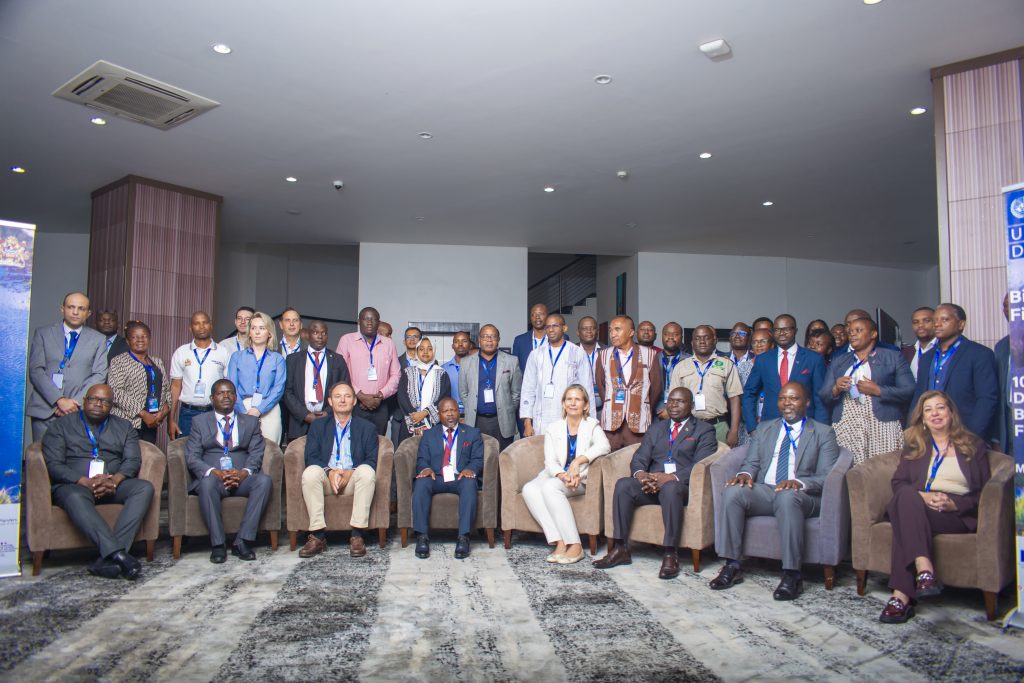
Advancing Biodiversity Conservation: 10th Africa Regional Dialogue on Biodiversity Finance
3 April 2024 – Blantyre: Planet Earth requires approximately US$ 950 billion annually for the restoration and protection of its…

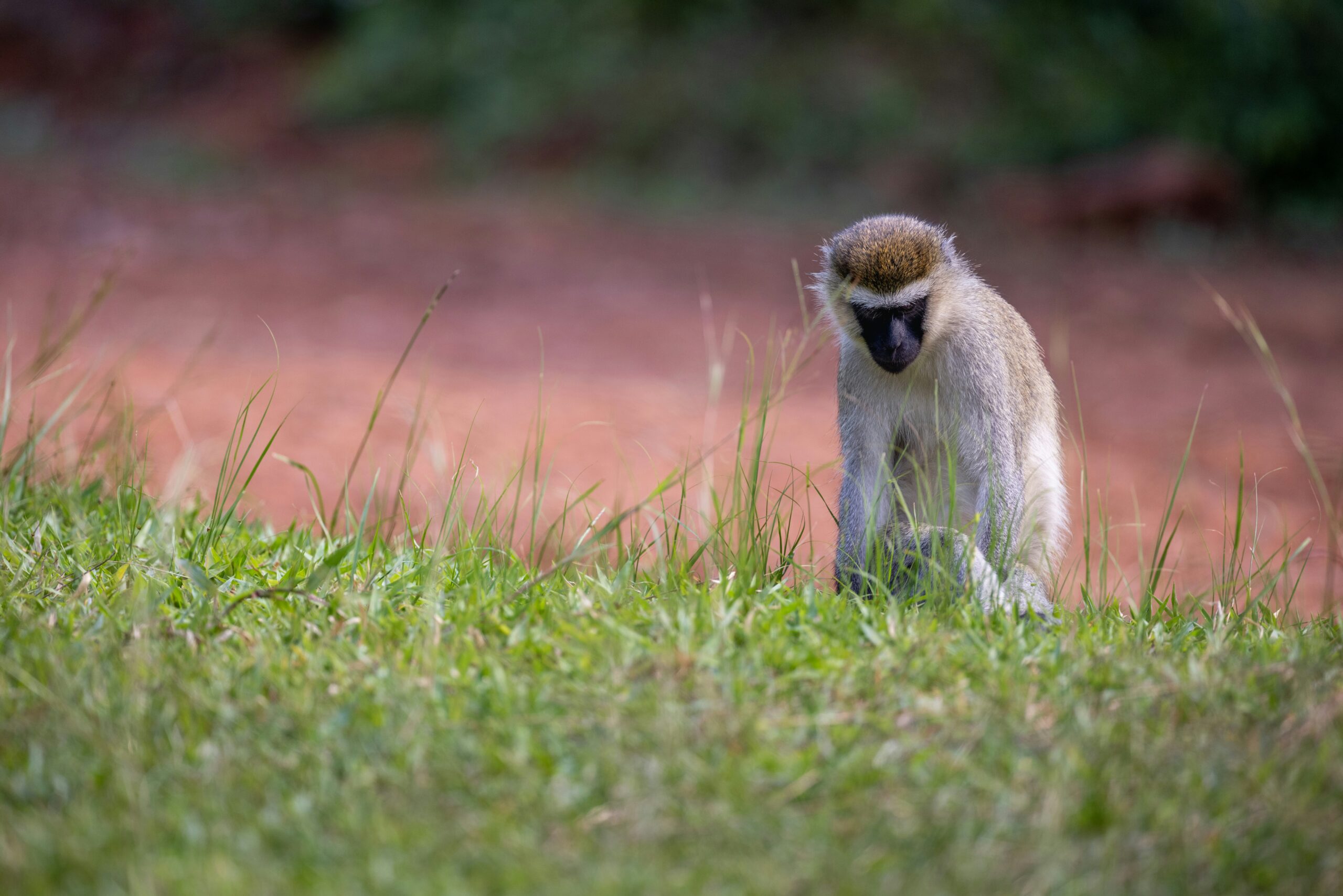




Uganda is one of East Africa’s most biodiverse countries, with ecosystems ranging from tropical forests and savannahs to mountains, wetlands, lakes and river systems. This natural wealth supports globally important wildlife and provides essential ecosystem services for millions of people. Biodiversity and healthy ecosystems underpin key sectors of the economy, including agriculture, fisheries, forestry and tourism, while supporting food and water security, rural livelihoods and resilience to climate change.
Despite its importance to Uganda’s economy and development, biodiversity continues to face pressures from habitat loss and degradation, unsustainable natural resource use, pollution, climate change and competing demands for land and water. Financing available for conservation and sustainable ecosystem management remains insufficient, while biodiversity considerations need to be more systematically integrated into public and private financial decisions. Closing this gap requires both more resources for nature and better alignment of existing financial flows with biodiversity priorities.
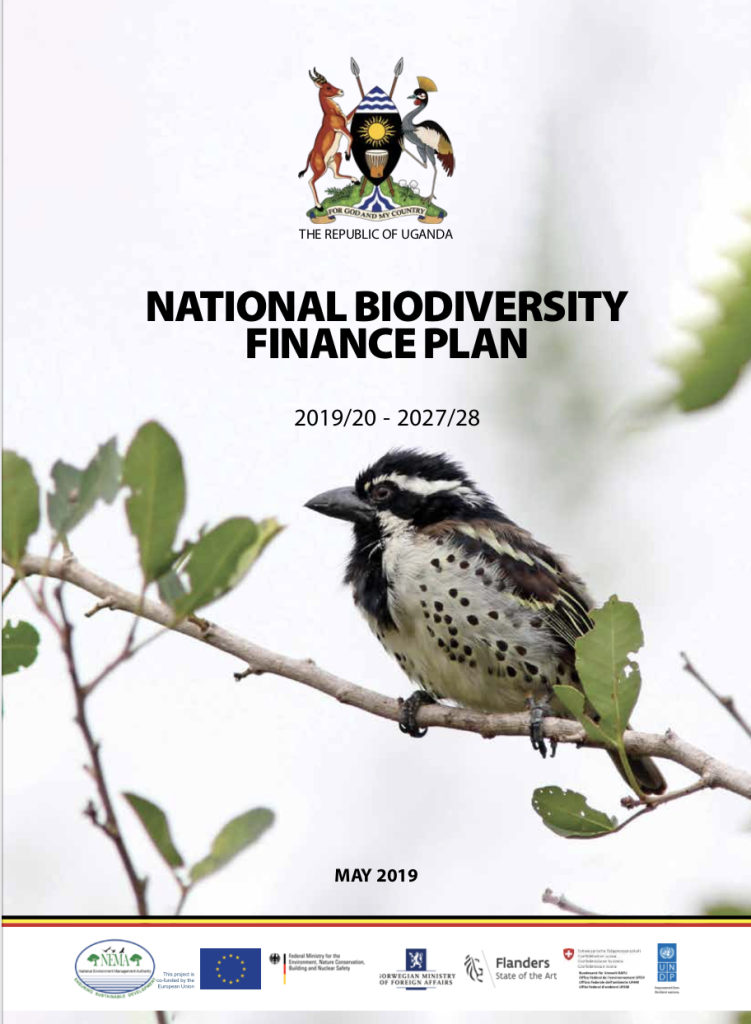
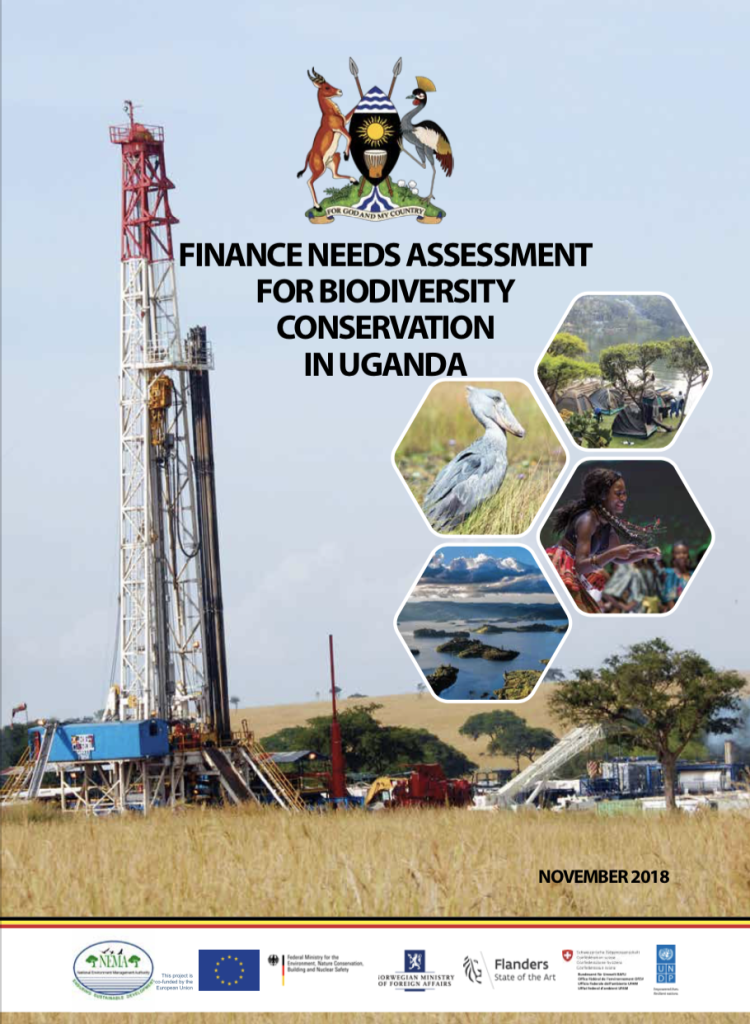
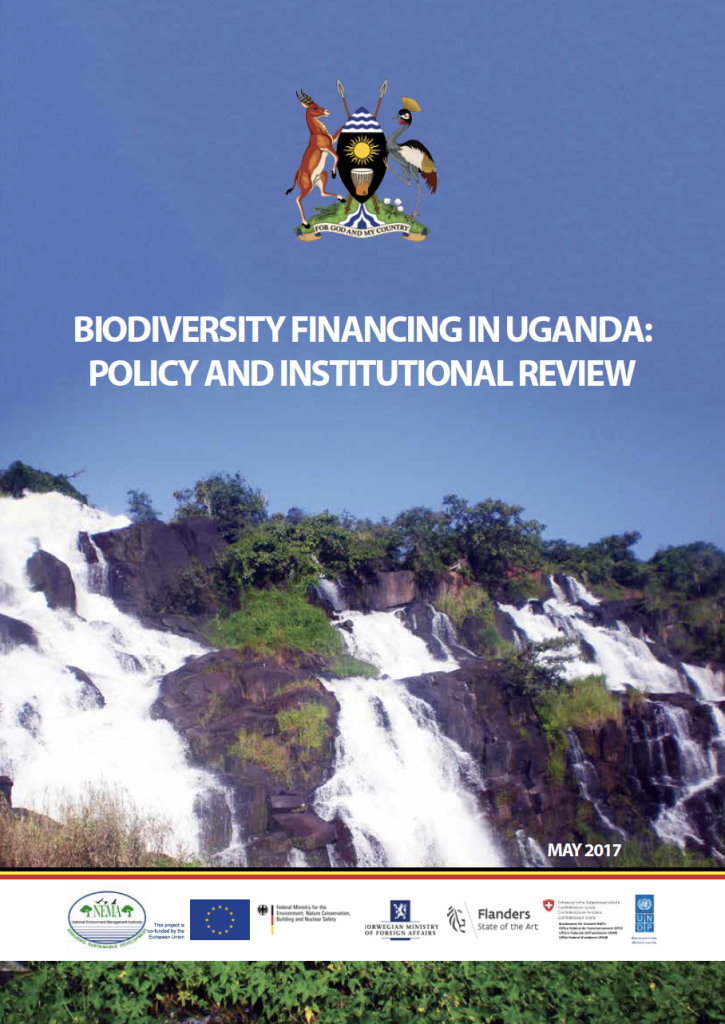
UNDP BIOFIN is supporting Uganda to address these challenges through a systematic approach to biodiversity finance. The country has completed its Policy and Institutional Review, Biodiversity Expenditure Review, Finance Needs Assessment and National Biodiversity Finance Plan, which prioritized eight finance solutions to mobilize additional resources and improve the effectiveness of biodiversity expenditure.
Uganda is now moving from analysis to implementation. UNDP BIOFIN is supporting innovative approaches including Ecological Fiscal Transfers, Payments for Ecosystem Services and community-based biodiversity finance, while strengthening biodiversity integration into public planning and budgeting. More recently, the programme has also supported Uganda to identify and redesign subsidies and incentives that can negatively affect biodiversity, helping align financial flows with the country’s biodiversity priorities and the Kunming–Montreal Global Biodiversity Framework.
1. Ecological Fiscal Transfers
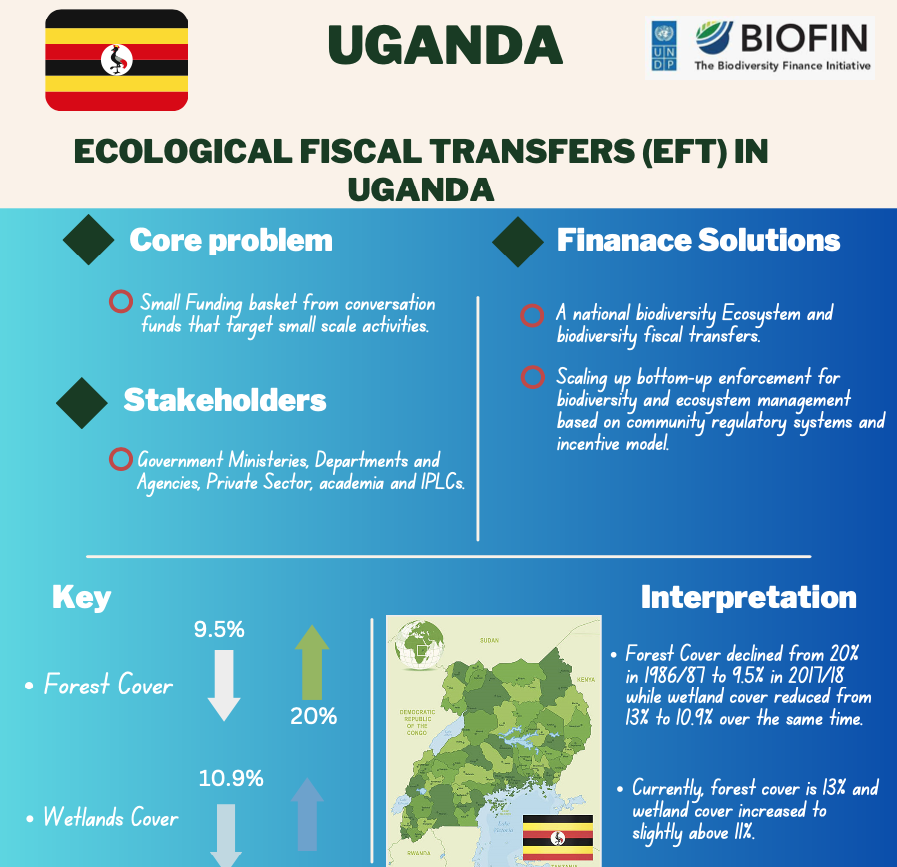
UNDP BIOFIN is supporting Uganda to develop an Ecological Fiscal Transfer (EFT) mechanism that incorporates biodiversity and ecosystem considerations into public finance allocations to local governments. A National Biodiversity and Ecosystem Index provides a basis for linking fiscal transfers with ecological performance, creating incentives for local governments to conserve and sustainably manage important ecosystems. EFT has become one of Uganda's priority biodiversity finance mechanisms.
2. Biodiversity Offsets and the Polluter-Pays Principle
Uganda's Biodiversity Finance Plan identifies biodiversity offsets and related mechanisms as a way to address residual biodiversity impacts from economic development. The solution aims to strengthen application of the no-net-loss and polluter-pays principles, ensuring that developers address unavoidable impacts on biodiversity and contribute resources toward conservation and restoration.
3. Payments for Ecosystem Services
Uganda is advancing Payments for Ecosystem Services (PES) to generate sustainable financing for the conservation and restoration of forests, wetlands, catchments and other ecosystems. The approach seeks to create financial incentives for communities and land managers that maintain ecosystem services and to mobilize contributions from beneficiaries, including water users. PES is among the innovative mechanisms currently being advanced through UNDP BIOFIN.
4. Biodiversity Risk Management and Resource Mobilization
The Biodiversity Finance Plan proposes the development of risk-management instruments and a fundraising platform for biodiversity conservation. The solution seeks to address operational, reputational and policy risks that can constrain investment while improving opportunities to mobilize public, private and development finance for biodiversity.
5. Strengthening Community-Based Biodiversity Management
Uganda's biodiversity finance approach recognizes the important role of communities in managing forests, wetlands and other natural resources. The solution seeks to strengthen local biodiversity management through appropriate regulatory systems, incentives and financing arrangements, helping channel resources toward conservation while supporting sustainable livelihoods.
6. Strengthening Biodiversity Budgeting and Expenditure Effectiveness
UNDP BIOFIN supports efforts to improve how biodiversity is incorporated into government planning, budgeting and expenditure. This includes strengthening the evidence available to decision-makers, integrating biodiversity into national and sectoral planning and improving the efficiency and effectiveness of public resources allocated to biodiversity priorities. Uganda's BIOFIN assessments found that biodiversity expenditure represented around 1.2% of the Government's annual budget during the period assessed.
7. Mobilizing Private and Innovative Finance for Biodiversity
Uganda is working to diversify biodiversity finance beyond conventional public and donor funding by engaging the private and financial sectors. Current work is exploring mechanisms including green bonds and other innovative financial instruments that can mobilize investment for biodiversity-positive activities while generating economic and social benefits.
8. Strengthening Sustainable Finance for Biodiversity
The Biodiversity Finance Plan also seeks to strengthen the enabling environment for sustainable biodiversity finance, including financial mechanisms capable of attracting additional capital for conservation, restoration and sustainable natural-resource management. This complements Uganda's broader efforts to integrate biodiversity considerations into economic and financial decision-making.
Integrating Biodiversity into National Development Planning
UNDP BIOFIN has supported Uganda to integrate biodiversity values and financing considerations into national development planning and sectoral strategies. This is helping mainstream biodiversity beyond the environmental sector and strengthen its consideration in wider economic, planning and investment decisions.
Advancing Ecological Fiscal Transfers
UNDP BIOFIN is supporting the development of Ecological Fiscal Transfers (EFTs) as an innovative public finance mechanism for biodiversity. The approach aims to integrate ecological criteria into the allocation of resources to local governments, creating financial incentives for improved ecosystem conservation and management. EFTs are among the innovative mechanisms Uganda is advancing to mobilize additional resources for biodiversity.
Operationalizing Payments for Ecosystem Services
Uganda is advancing Payments for Ecosystem Services (PES) to create sustainable financial incentives for communities and land managers who conserve forests, wetlands, catchments and other ecosystems. In 2025, UNDP BIOFIN and the National Environment Management Authority strengthened institutional capacity for PES implementation, while work is progressing toward a digital PES system that can enable transparent, performance-based payments and support future scaling.
Identifying and Redesigning Harmful Subsidies
UNDP BIOFIN supported Uganda to identify subsidies and incentives that can unintentionally harm biodiversity, with particular attention to agricultural chemicals and packaging materials. The resulting Subsidy Redesign Action Plan proposes measures to redirect incentives toward organic inputs, biopesticides, Integrated Pest Management, waste reduction and environmentally responsible packaging. Uganda is now moving toward implementation of these reforms, contributing directly to Target 18 of the Kunming–Montreal Global Biodiversity Framework.
Strengthening Community-Based Biodiversity Finance
UNDP BIOFIN is strengthening the role of local and Indigenous communities in designing biodiversity finance approaches that connect conservation with sustainable livelihoods. Recent engagement has identified opportunities including Payments for Ecosystem Services, green enterprises, district environment funds and community forestry and co-management arrangements, helping ensure that biodiversity finance reaches the communities directly managing natural resources.
Building a National Biodiversity Finance Framework
Uganda completed the four core BIOFIN assessments — the Policy and Institutional Review, Biodiversity Expenditure Review, Finance Needs Assessment and National Biodiversity Finance Plan. The resulting Plan prioritized eight finance solutions to increase investment in biodiversity conservation, restoration and sustainable management. Uganda has since moved into implementation, with priority solutions being advanced through the current phase of UNDP BIOFIN.