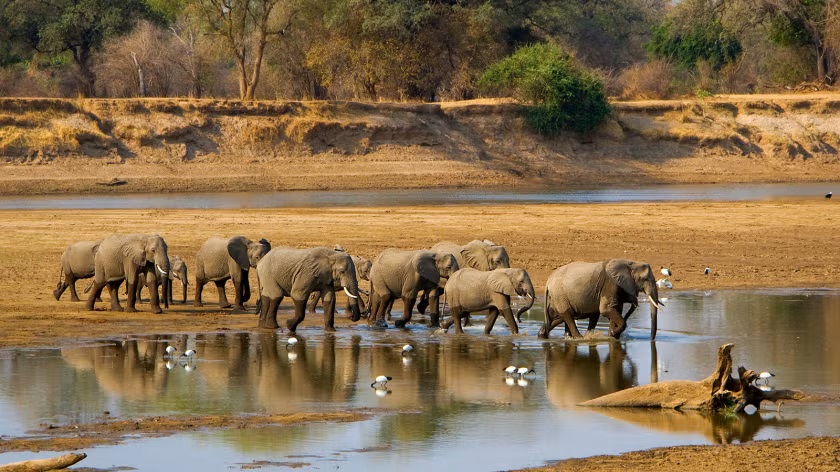
Zambia is endowed with rich biodiversity and extensive natural ecosystems, including forests, wetlands, freshwater systems and wildlife habitats that provide essential services for communities and the economy. The country’s natural capital supports agriculture, fisheries, forestry, tourism and rural livelihoods, making biodiversity conservation an important foundation for sustainable development.
However, Zambia’s biodiversity faces growing pressures from habitat loss and degradation, deforestation, unsustainable natural resource use, climate change and competing demands for land and water. At the same time, financing available for biodiversity remains insufficient to meet national conservation and restoration priorities. Closing this gap requires more effective use of existing public resources alongside greater engagement of the private and financial sectors and innovative sources of finance.
UNDP BIOFIN is supporting Zambia to build a more systematic approach to financing biodiversity. During its initial phase, the programme completed the Policy and Institutional Review (PIR), Biodiversity Expenditure Review (BER) and Finance Needs Assessment (FNA). These assessments informed the development and national validation of Zambia’s Biodiversity Finance Plan (BFP), providing an evidence-based framework for identifying, prioritizing and implementing finance solutions.
Building on this foundation, UNDP BIOFIN is supporting Zambia to move from analysis to implementation, with a focus on mobilizing public, private and financial-sector resources, improving the effectiveness of biodiversity expenditure and developing finance solutions that can help close the biodiversity financing gap at scale.
$150M
Green Finance
Mobilized for environmentally positive investments through BIOFIN-supported green bond reforms.
$242M
Finance Needs
Estimated biodiversity finance required to achieve Zambia's NBSAP targets (2018–2030).
3
Finance Solutions
Three flagship green finance solutions launched to transform Zambia's financial sector.
Finance solutions
1. Technical Assistance for Green Bond Market Development and Transaction Preparation
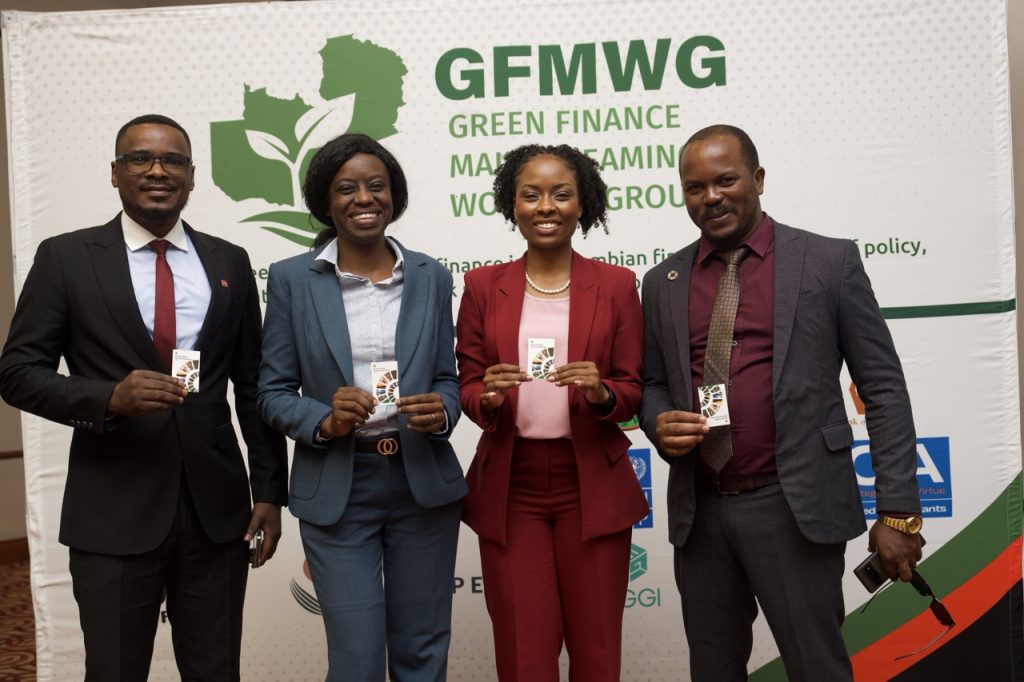
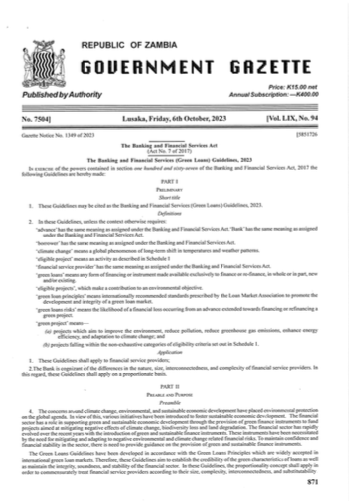
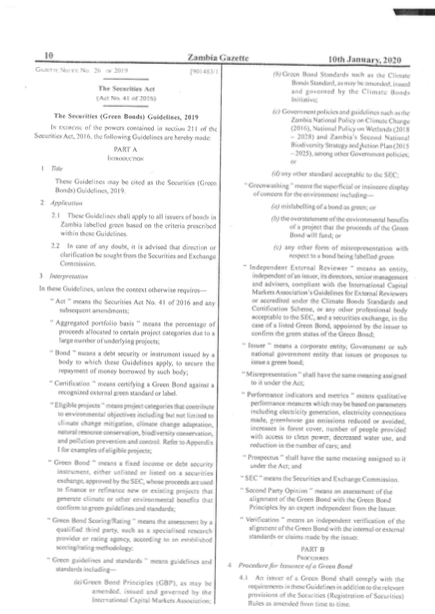
The main objective of this finance solution is to develop Zambia’s green bond market with a view to have a some of the proceeds of green bonds go towards financing biodiversity conservation initiatives. Having finalized the development of the green bond guidelines and listing rules which have since been gazzeted, the next steps are mainly capacity building of the Securities and Exchange Commission who will be approving green bond applications as well as the newly formed Green Finance Mainstreaming Working Group in terms of reviewing proposals, development of customized standards and taxonomies for specific sectors as well as provision of TA support in green bond structuring support to potential issuers.
2. Mainstreaming biodiversity in the Green Finance Policy and implementation plan for the Financial Sector
The main objective of this finance solution is to mainstream biodiversity conservation, climate change and land degradation ethos into the soon to be developed Green Finance Policy for the financial sector. The development of the Green Finance Policy for the financial sector will help to provide a platform to mainstream biodiversity into the credit policies and other financial sector products especially in terms of credit allocation across other sectors.
3. Developing a Green Finance Tagging/reporting System for the Financial Sector
The main objective of this finance solution is to mainstream biodiversity conservation, climate change and land degradation markers into the reporting systems of the financial sector so that it is easier to track the flow of green finance in these sectors.
The expected result is twofold (i) Enable the tracking of green finance through the financial sector (ii) Once tracking commences, it will be easier to make decisions to lobby for an increased allocation of financial products for the green sector. At present, it is not known how much the financial sector contributes in terms of green finance which makes it difficult to make policy decisions.
Key results
Catalysed Zambia’s green bond market, supporting policy and regulatory reforms that have mobilised over US$150 million for environmentally positive and climate-aligned investments through green bonds.
Supported the development and successful launch of Zambia’s Green Finance Taxonomy, establishing a national benchmark for defining green and nature-positive economic activities and strengthening credibility in sustainable finance markets.
Delivered a pioneering study on nature-related financial risks, providing evidence-based insights to help financial institutions, regulators, and policymakers better understand, assess, and manage biodiversity and ecosystem-related risks across the economy.
Established a strong analytical foundation for biodiversity finance in Zambia through the completion of the Policy and Institutional Review, Biodiversity Expenditure Review, Finance Needs Assessment, and the development and national validation of the Biodiversity Finance Plan. Together, these foundational instruments have informed policy dialogue, guided reforms, and shaped strategic decision-making on financing biodiversity conservation and sustainable natural resource management.
The PIR has been completed and ready for publishing. The process included a review of the policies, legal instruments and institutional set ups for biodiversity financing. Through the PIR, Zambia did identify a number of potential solutions some of which found their way into the BFP.
Data collection for years 2014-2018 has since been collected and analyzed. The full report is expected to be finalized within the second quarter of 2019. Preliminary key findings include low budgetary allocation towards biodiversity which is below 1%, low budget releases ranging from 5-40% and larger allocation of the annual budgets towards human resources in comparison to other biodiversity categories. Full results will be shared once the report has been finalised.
The FNA is currently at 90% completion. The total finance needs that were derived from the FNA are $242m for a period ranging from 2018-2030. Among the five strategic Goals of Zambia's NBSAP, Strategic Goal A which is focussed on addressing the underlying causes of biodiversity loss has the largest finance needs at 51% followed by Goal B which is focussed on reducing the direct pressures on biodiversity at 23%. Goal E which is focussed on enhancement of implementation through participatory planning, knowledge management, and capacity building has the least finance needs at 2%.
Zambia's Biodiversity Finance Plan (BFP) is currently at 90% completion. The BFP is composed of seven (7) finance solutions. The validated report is expected to be finalized within the third quarter of 2019 with a possibility of two more finance solutions emerging from the validation process which will bring the total number of solutions to nine (9).
Two finance solutions have so far been prioritized for implementation under BIOFIN phase 2. These are as follows;
(i) Development of the Green bond market in Zambia focussing on the development of green bond guidelines and listing rules with the Securities and Exchange Commission of Zambia as well as the Lusaka Securities Exchange (LuSE) respectively. The target result is to raise green finance that has co-benefits between climate change and biodiversity conservation.
(ii) Development of a Biodiversity Fiscal and Non-Fiscal Incentives Framework earmarked at encouraging private sector investments in biodiversity conservation.
Below is the progress on the two priority finance solutions:
(i) Development of the Green bond market in Zambia. The development of the green bond guidelines and listing rules with the Securities and Exchange Commission of Zambia, as well as the Lusaka Securities Exchange (LuSE), is currently underway. BIOFIN Zambia is currently seeking support for the provision of technical assistance support to would be issuers of green bonds.
(ii) Development of a Biodiversity Fiscal and Non-Fiscal Incentives Framework earmarked at encouraging private sector investments in biodiversity conservation: This solution is being implemented in conjunction with the Zambia Development Agency. Currently, stakeholder input on the proposed incentives is underway. Once finalized, the input will be analysed which will lead to the development of an incentives framework for biodiversity in Zambia. The framework will be the output that will be used as a basis for lobbying to Government for the inclusion of some of the proposed incentives into legislation for onward implementation
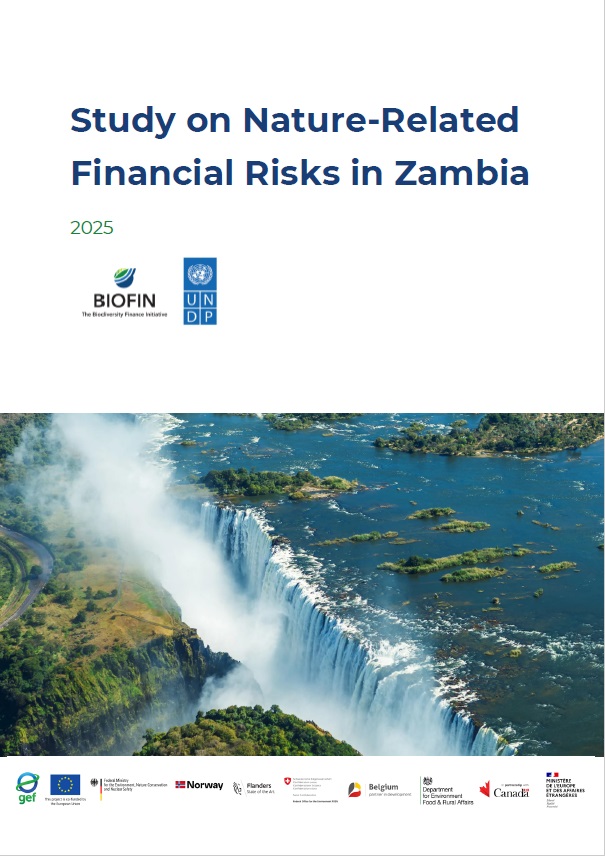
The Study on Nature-Related Financial Risks in Zambia draws on lessons and insights from international experiences, tailored to Zambia’s unique context. It serves as a national…