
Panama identified US$95.9 million in public spending on projects related to the environment, sustainable development and biodiversity in 2024, according to its first Biodiversity Expenditure Review (BER). The finding gives the country a clearer picture of the resources already supporting nature and a starting point for deciding what more is needed.
The spending identified represents 0.48% of executed spending by the non-financial public sector and 0.11% of Panama’s gross domestic product. The review examined spending that supports protected areas, ecosystem restoration, scientific research and the sustainable use of natural resources.
It also looked within larger programmes to identify the share that directly benefits biodiversity. Panama’s sanitation programme, for example, primarily aims to reduce pollution, but also benefits the ecosystems of Panama Bay, including its mangroves and wetlands. The BER counted the relevant portion of that investment.
From measuring spending to identifying the finance gap
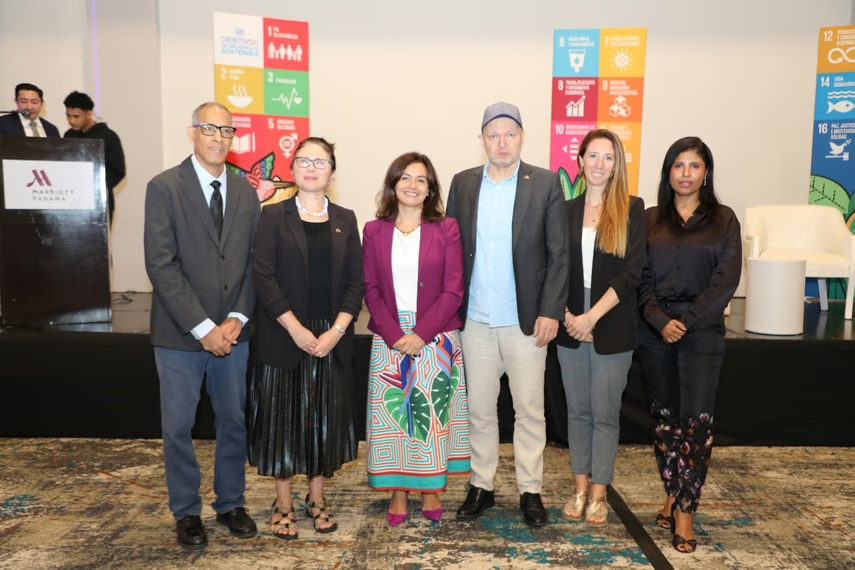
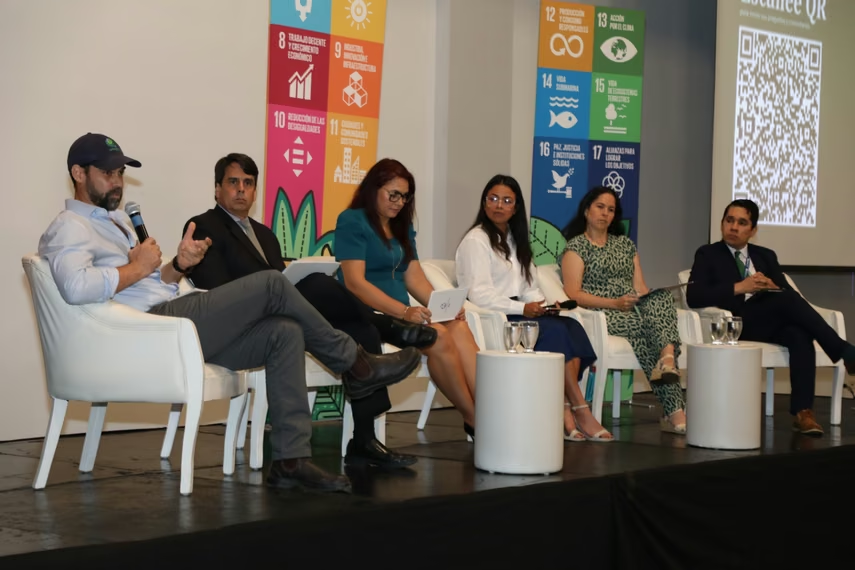
The expenditure review is one of three studies presented by Panama’s Ministry of Environment and UNDP BIOFIN. The other two examined the policies and institutions that influence biodiversity finance, and subsidies and incentives with potential effects on nature. Together, the studies provide evidence to guide discussions on future investment.
The US$95.9 million figure shows what the review identified in 2024. It does not yet show whether that spending is sufficient to achieve Panama’s biodiversity goals. That distinction matters, according to Magda Monteza, a senior consultant on environmental governance and sustainable development with UNDP, who spoke to La Estrella de Panamá following the presentation of the findings.
“What comes next is to be more efficient, more effective and, above all, improve the traceability of biodiversity spending,” Monteza said.
The next step is a Financial Needs Assessment, which will estimate the cost of meeting national biodiversity priorities and help determine the financing gap. Panama will then develop a Biodiversity Finance Plan to identify and prioritize solutions that make better use of existing resources and mobilize additional finance.
UNDP BIOFIN has been implemented in Panama since 2025 by the Ministry of Environment and the United Nations Development Programme. The new evidence marks a step from measuring current spending towards a practical plan for financing the country’s biodiversity priorities.