
For Thailand’s biodiversity finance perspective, UNDP has conducted the review of biodiversity-related expenditures for all government agencies from 2022 – 2024. The findings show that the country’s primary funding for biodiversity comes from the government budget. Budget data shows that responsibility for biodiversity-related activities rests mainly on three core environmental agencies – the Department of Marine and Coastal Resources, the Department of National Parks, Wildlife and Plant Conservation, and the Royal Forest Department. All three are within the Ministry of Natural Resources and Environment, making the ministry the central authority in charge of biodiversity conservation and management efforts in Thailand. Total biodiversity-related expenditures for the fiscal years 2022 – 2024 amount to 20.8 billion THB, but there are fluctuations from year to year. Taken together with findings from previous BER, it is found that allocations for biodiversity from government budget as a proportion of total government expenditures is in decline, dropping from 0.53% in 2016 to 0.38% in 2020, and to 0.16% in 2022 before rebounding slightly to 0.30% in 2023. To address the funding gap and improve efficiency, the government should explore increased private sector involvement, cost-saving measures, and revenue generation strategies for biodiversity conservation and to avoid future expenditure on the biodiversity.
PUBLICATIONS
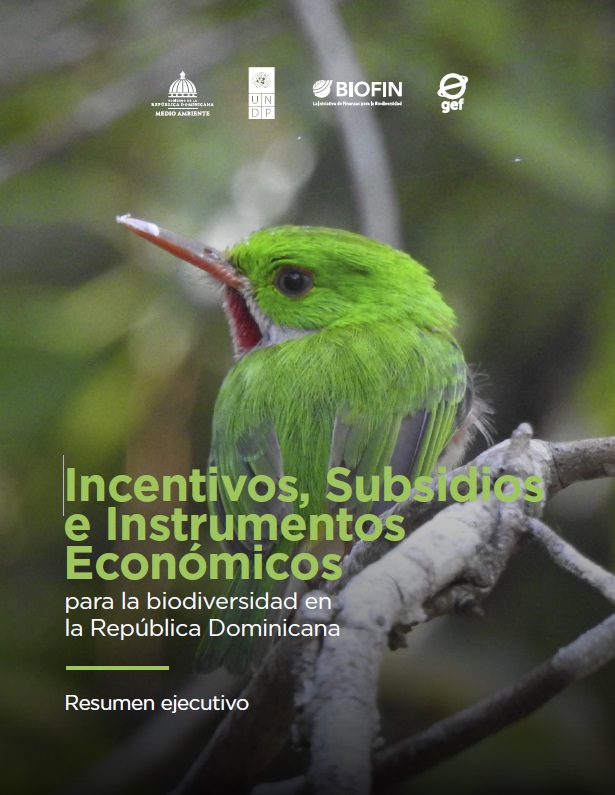
Incentives, Subsidies and Economic Instruments for Biodiversity in the Dominican Republic
Developed under BIOFIN, this study examines how existing economic incentives, subsidies, and financial instruments influence biodiversity and identifies opportunities to better align economic development with nature conservation. The assessment identifies 46 instruments with potential implications for biodiversity, including 15 that present opportunities for improvement or reform, 23 with potentially positive impacts, and eight potential public […]