
Agricultural finance shapes what farmers produce, the practices they adopt, and where they invest. In Colombia, UNDP’s Biodiversity Finance Initiative (BIOFIN) and FINAGRO, the country’s second-tier agricultural development finance institution, are working to align agricultural finance with more sustainable production models while reducing pressures on biodiversity.
Their collaboration has progressed from identifying potentially harmful incentives to developing a green-credit roadmap, assessing production practices and building financial models. Regional financing programmes are now being developed to translate this technical work into support suited to different landscapes and producers.
From assessment to reform priorities
Colombia’s work began with a national assessment of agricultural and rural-development incentives in 2021–2022. It inventoried 42 instruments, including policies, programmes, subsidies and credit mechanisms, and prioritized four instruments for a reform pathway.
The assessment examined how incentives interact with agricultural production, rural development and land use. Because available data did not allow direct attribution of biodiversity impacts to individual instruments, geospatial analysis helped examine land-cover changes associated with agricultural production systems.
This provided a foundation for identifying where financial instruments could be redesigned. In 2024, UNDP BIOFIN began collaborating with FINAGRO to develop a roadmap for greening agricultural credit.
Designing credit around ecosystems and producers
The roadmap connects three practical questions: where should sustainable production be supported, which practices are appropriate, and what financing do producers need to adopt them?
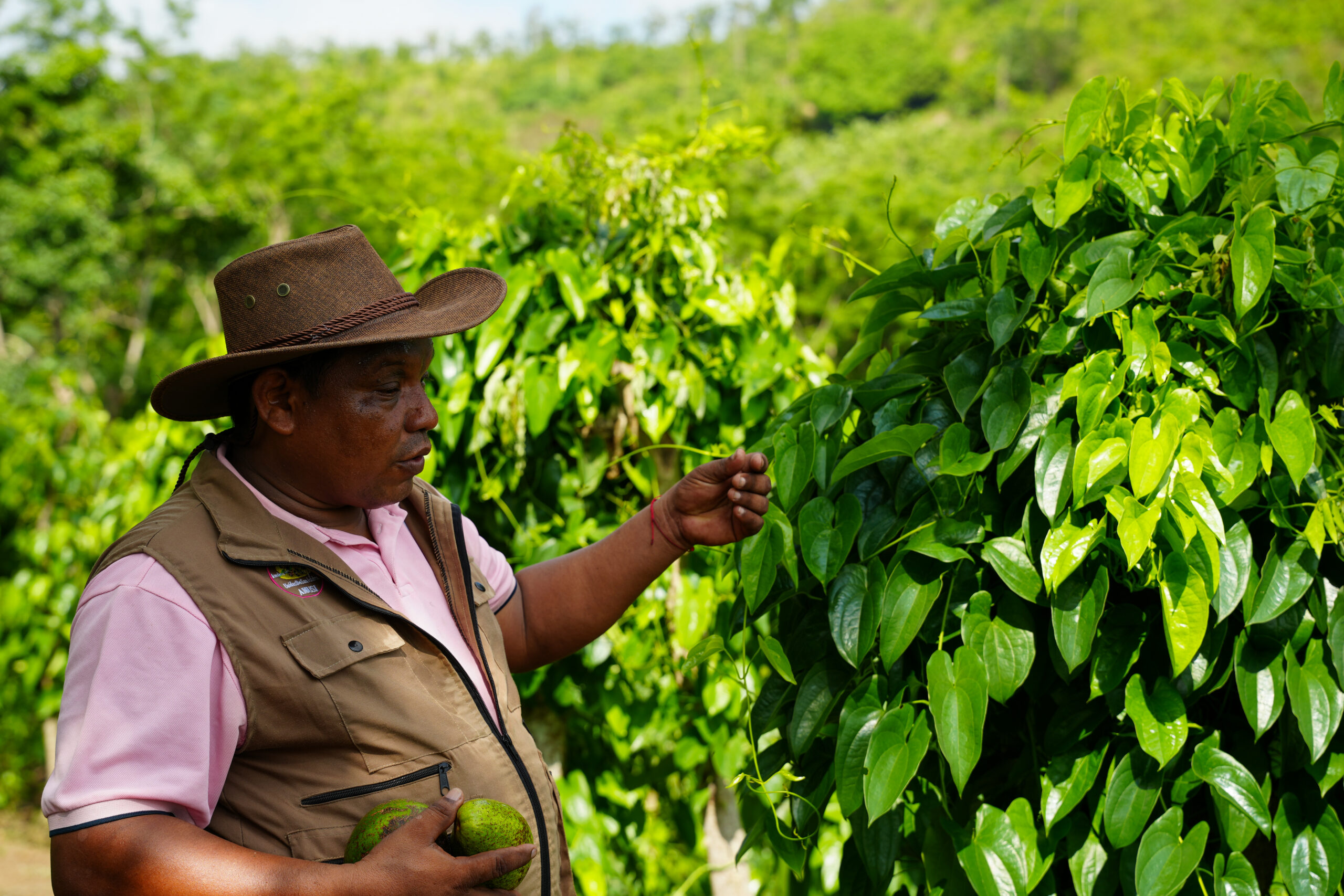
The approach initially covers six value chains: cattle ranching, rice, cocoa, coffee, cassava and non-timber forest products.
Geographic analysis combines production data with land-cover maps and ecosystem information to identify priority locations. Sustainable practices are then examined for their suitability to those ecosystems, alongside their implementation costs and potential economic benefits.
Environmental safeguards and legal compliance are also central, including the exclusion of environmentally sensitive and legally protected areas from credit eligibility.
Financial models compare conventional and sustainable production systems. They consider costs, revenues, production cycles and producers’ livelihoods to inform credit conditions, including loan amounts, repayment terms and grace periods.
The aim is to develop financing that reflects both environmental objectives and the practical circumstances of agricultural producers.
Building the evidence for greener finance
FINAGRO and UNDP BIOFIN reported several technical outputs for 2025:
- 51 ecosystems analyzed to understand their relationship with production.
- 160 sustainable production practices validated and financially analyzed.
- 136 production units financially assessed.
- 12 tools developed to analyze the profitability of sustainable production models.
These outputs strengthen the evidence available for credit design. They help identify suitable practices, assess transition costs and examine whether proposed production models are financially viable.
Technical work also examined rice and livestock systems in La Mojana Region and the Caribe Region, with support from the Inter-American Development Bank, WWF and The Nature Conservancy. UNDP BIOFIN developed an agro-economic monitoring tool to assess producers’ livelihoods and evaluate the socioeconomic effects of green credit.
Moving towards implementation
During the first half of 2026, UNDP BIOFIN advanced agro-economic parameters and financial models for coffee, cocoa and rice, alongside preparations to publish sustainable production frameworks for livestock, rice and cassava.
The team also designed regional financing programmes to foster engagement among local stakeholders and provide producers with integrated financial solutions, including credit, insurance, financial education, and other incentives.
In La Mojana Region, FINAGRO is developing a programme under its Sustainable Productive Transformation Credit Line to support climate-resilient, low-emission livestock production.
For the BioSouth Corridor in Nariño–Putumayo, another programme is being prepared to mobilize financing for sustainable production systems in the transition between the Amazon and Andean regions.
These programmes are intended to connect the green-credit methodology with regional needs. The longer-term ambition is to extend the approach beyond the six priority value chains to an additional 32 agricultural credit destinations.
The results documented so far primarily concern assessments, tools, financial models and programme design. Tracking financing delivered, producer participation and changes in production practices will help establish their subsequent effects.
Extending the approach to energy
Colombia is also examining incentives in the energy and hydrocarbons sectors.
Working with the Ministry of Mines and Energy and the Ministry of Environment, UNDP BIOFIN supported an inventory of 30 policies and financial instruments with potential biodiversity impacts. During the first half of 2026, the inventory and characterization were completed and validated by the Ministry of Mines and Energy.
Technical factsheets describe each instrument’s regulatory, financial and environmental characteristics, providing a foundation for a future reform roadmap.
Together, these efforts contribute to Target 18 of the Kunming–Montreal Global Biodiversity Framework. Colombia’s experience illustrates how screening and redesigning incentives can bring biodiversity considerations into sectoral finance while retaining a focus on production, livelihoods and development.
Explore the BIOFIN–FINAGRO publication on agricultural financial incentives in Colombia.