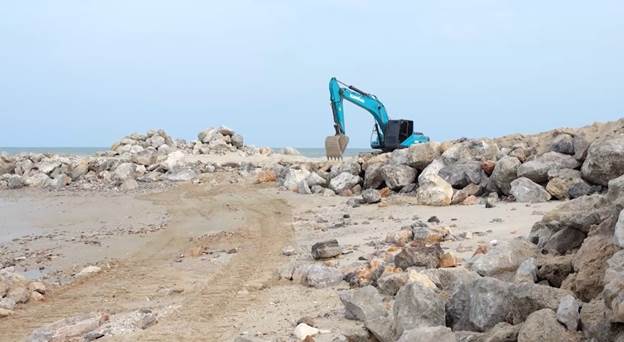

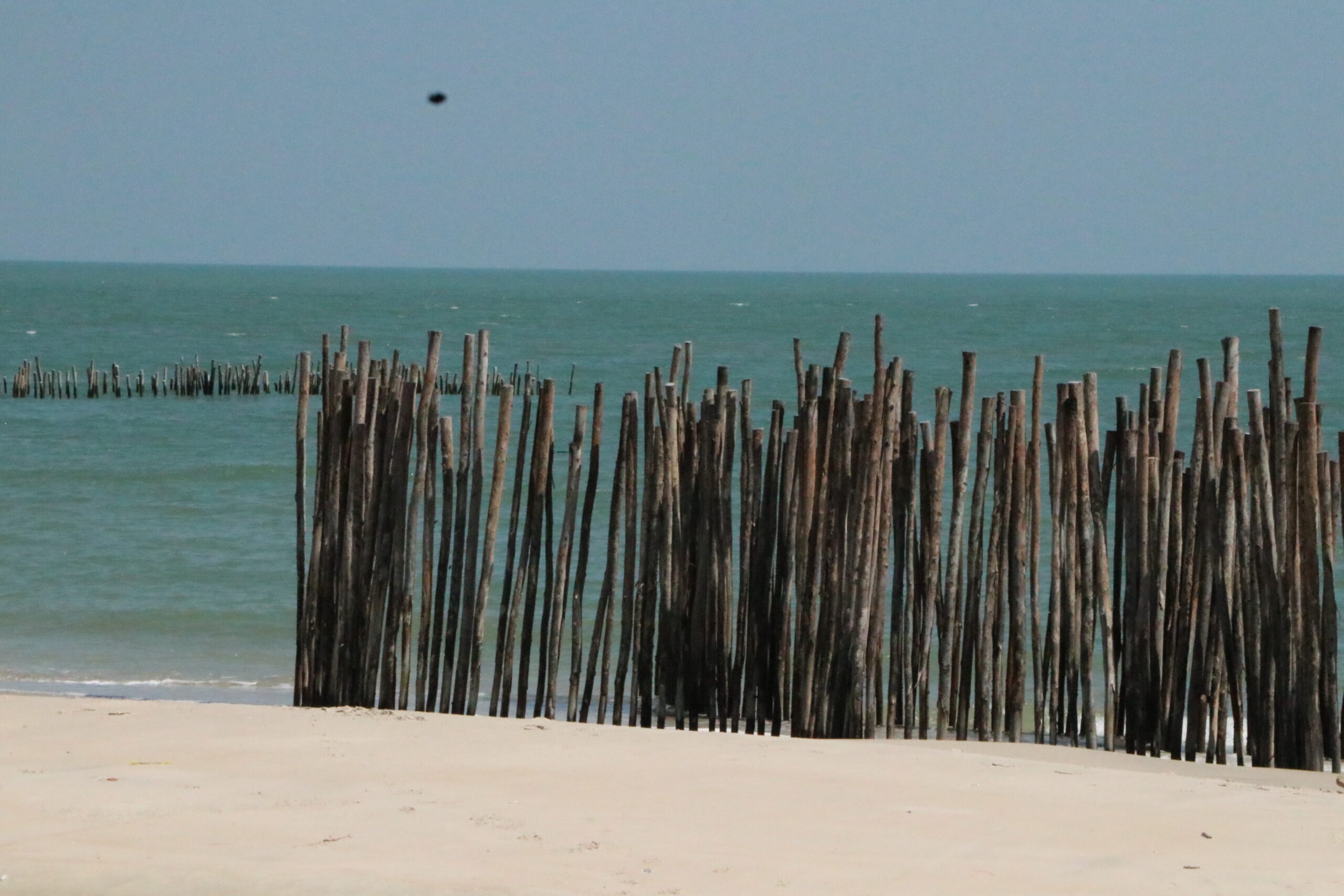
Evidence gathered by UNDP BIOFIN Thailand, researchers and national experts helped inform government decisions to remove harmful coastal structures and discontinue new budget requests for seawall construction from fiscal year 2025. UNDP BIOFIN’s progress report estimates that this reform avoids US$17 million in future annual expenditure.
At Mrigadayavan Palace in Phetchaburi Province, the changes are also showing ecological results. Following the removal of seawalls and groins, monitoring recorded dunes beginning to form, native coastal plants regenerating naturally and plovers using the beach, with nesting evidence documented.
Thailand’s experience illustrates a practical contribution to Target 18 of the Kunming–Montreal Global Biodiversity Framework: understanding how existing public support affects nature and reforming spending that causes harm.
Building the evidence for change
Coastal infrastructure is often built to address erosion and protect communities and property. Yet its effects depend on local conditions and the movement of water and sediment.
At Mrigadayavan Palace, a UNDP BIOFIN-supported assessment found that seawalls and groins disrupted sand movement, contributed to erosion and prevented natural dune formation. The research examined how these structures affected the wider coastal ecosystem, including vegetation, dunes and wildlife.
Working with researchers from Prince of Songkla University and national experts, UNDP BIOFIN helped build the ecological evidence needed to reconsider this approach to coastal protection.
Turning evidence into spending reform
The findings helped inform government decisions to remove harmful structures at Mrigadayavan Palace and reconsider further construction.
The change extended beyond the site. From fiscal year 2025, the Marine Department and the Department of Public Works and Town and Country Planning discontinued new budget requests for seawall construction.
UNDP BIOFIN estimates that this reform avoids around US$17 million a year in future expenditure. This represents spending avoided on further construction, rather than money recovered from past projects.
The reform demonstrates how biodiversity evidence can influence budget decisions across government, including in agencies responsible for infrastructure and public works.
Monitoring nature’s recovery
At Mrigadayavan Palace, removing coastal structures gave natural processes room to resume.
Monitoring documented early dune formation and the natural return of native coastal plants, which help trap sand and support dune development. Plovers were also recorded using the beach, with photographic evidence of an egg documented in early 2024.
These are encouraging signs of recovery. Continued monitoring will help establish how coastal habitats and species respond over time.
A practical contribution to Target 18
Thailand’s experience shows how assessing the effects of existing support can lead to concrete changes in public spending. Ecological evidence helped inform decisions to stop funding further harmful construction and create space for coastal recovery.
Supported by the Governments of the United Kingdom and Germany, UNDP BIOFIN’s assessment helped build the evidence for these reforms, demonstrating how public finance can better serve people and nature.