
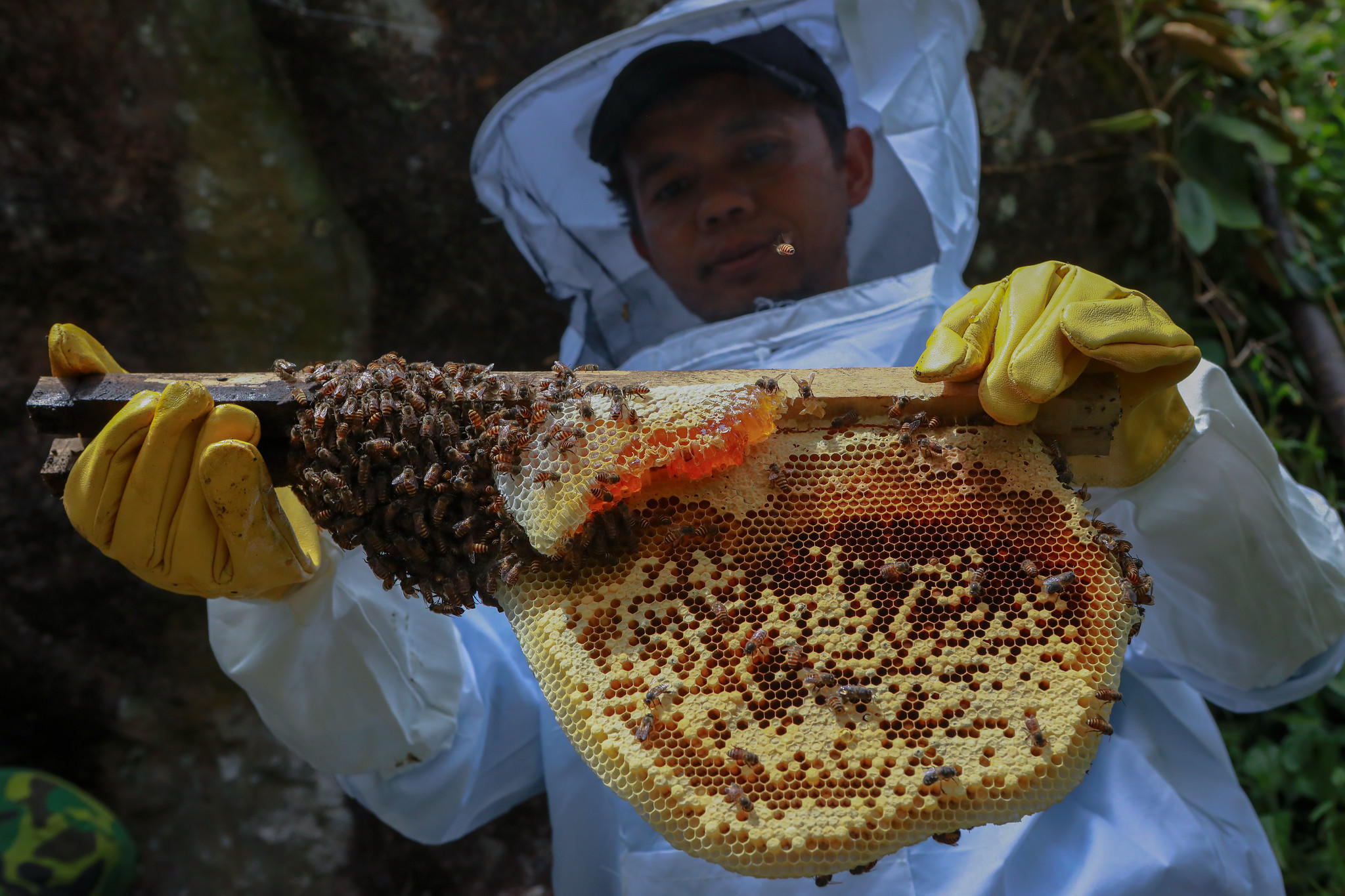
Look closely at the trees and rocky slopes of Kahayya Village, and you may find a honey bee colony tucked into a hollow or crevice. It belongs to Apis nigrocincta, a native species found in Sulawesi and parts of the Philippines. These bees have long been part of the highland landscape, moving between flowering plants in search of nectar and pollen. But for coffee farmers in this mountainous village in South Sulawesi, they are beginning to mean something more: a potential source of additional income, and a reason to see the surrounding forest not simply as a backdrop to their farms, but as something their livelihoods depend on.
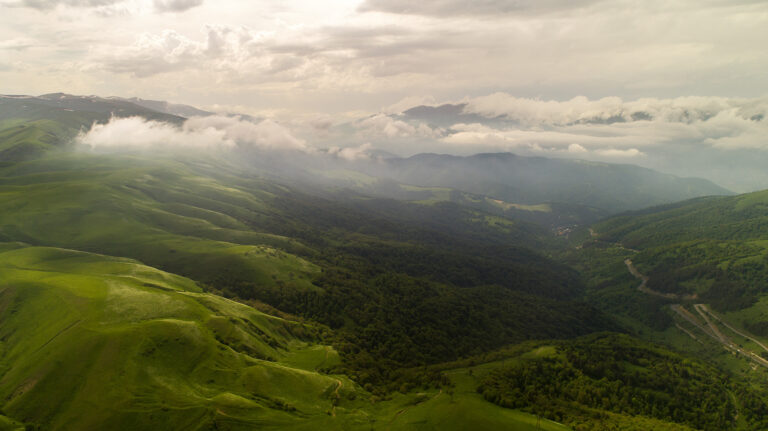
More than 1,000 metres above sea level, Kahayya is surrounded by steep hillsides, deep valleys and forested slopes. Its cool mountain climate and fertile land provide favourable conditions for coffee, cacao and avocado, crops that have supported local farming families for generations.
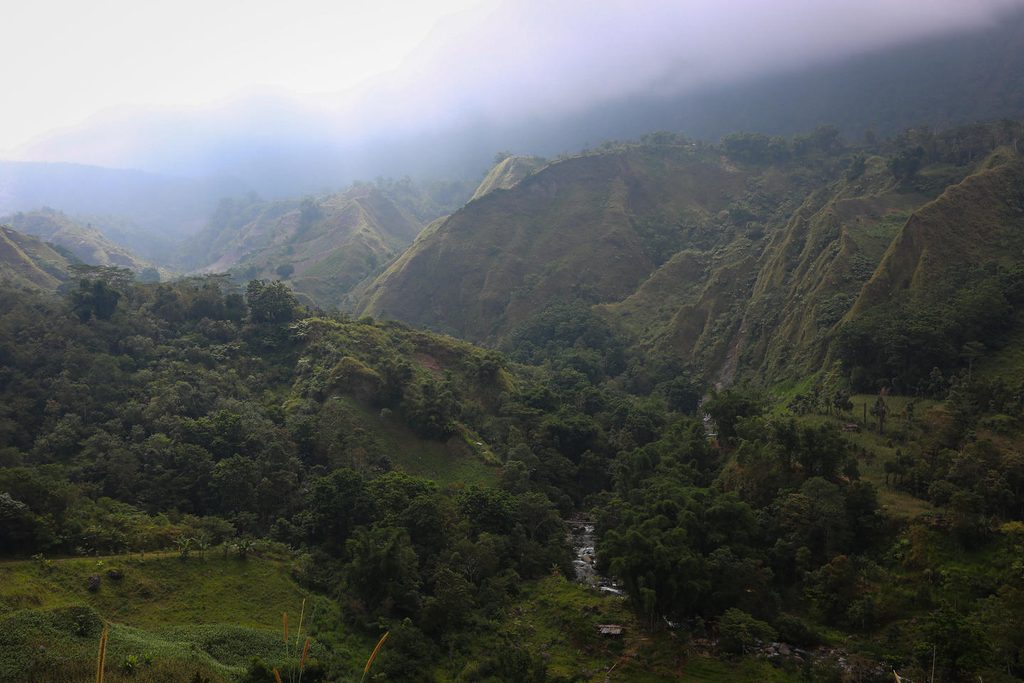
The landscape also sustains a rich variety of plants and wildlife. Among them is Apis nigrocincta, the black-banded honey bee, which nests in cavities in trees and rocks. As pollinators, these bees help flowering plants reproduce, including species that form part of the agricultural landscape.
The relationship between the bees and the crops growing around them is part of a much larger ecological picture. Trees and flowering vegetation provide food and nesting habitats for pollinators, while forests help retain water and protect the soil. These natural systems sustain the conditions on which farming depends, even when their contribution is not immediately visible.
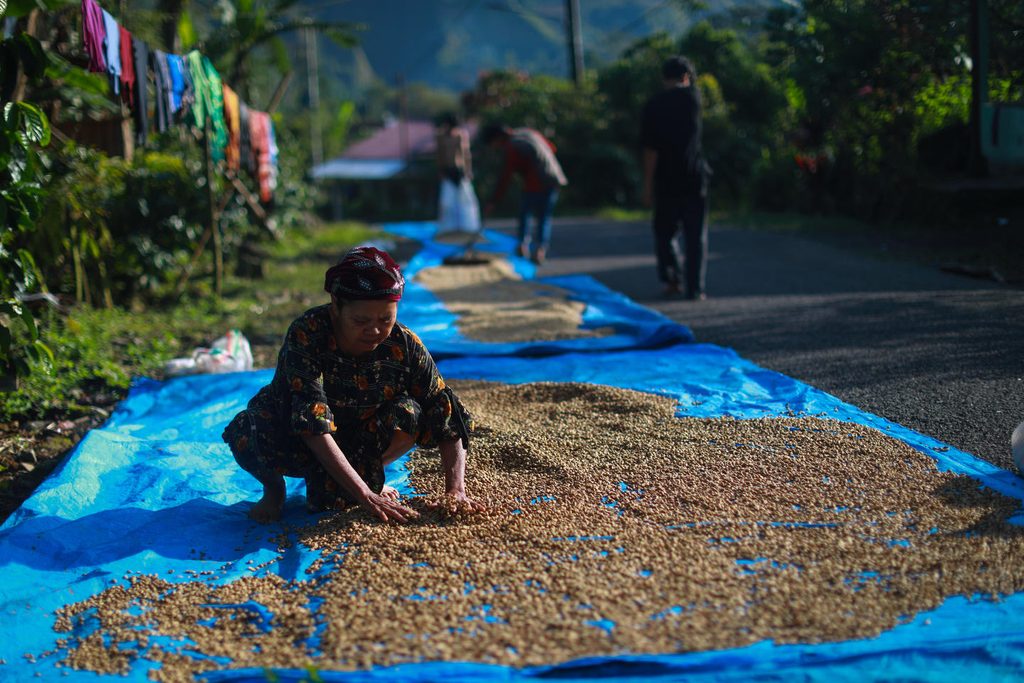
As coffee production expands, the forests and vegetation that sustain the village’s biodiversity face growing pressure. Across South Sulawesi, coffee production increases to 30,186 tonnes in 2024, up nearly 10 percent from the previous year. In Bulukumba, Kindang is one of the region’s important coffee-producing areas, with Kahayya recognised for its potential in Arabica coffee production. As Kahayya’s coffee gains wider recognition and demand, more farmers have an incentive to expand production. But when diverse vegetation gives way to monoculture plantations, habitats for pollinators and other wildlife can shrink, while the land becomes less resilient to environmental pressures.
The stakes are especially high in a mountainous landscape like Kahayya’s. Steep slopes and heavy rainfall make the village vulnerable to landslides, which have struck in recent years, at times cutting off its only road connection to Bulukumba. When vegetation is lost, the soil also loses some of the natural protection provided by tree roots and forest cover, increasing the vulnerability of the landscape to erosion and slope instability.
For Kahayya’s farmers, protecting the land is therefore inseparable from protecting their livelihoods. The same forests and vegetation that provide habitat for bees also help sustain the landscape on which their crops depend.
A Farmer’s Life among Coffee and Bees
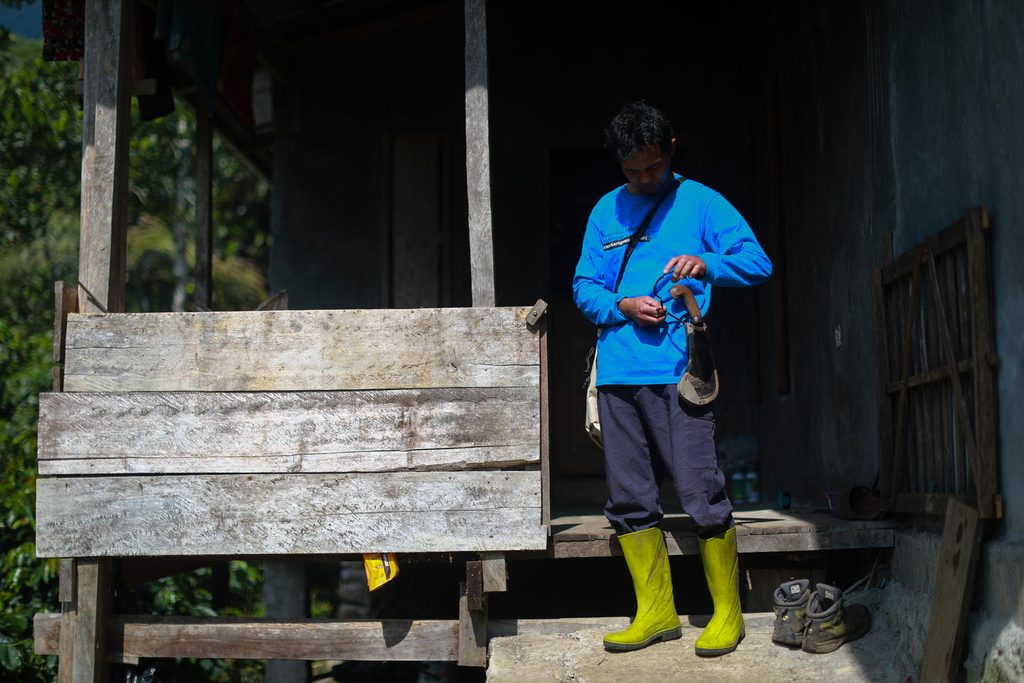
Abdul Kadir has spent much of his life farming coffee in Kahayya. He is also the head of a local farmer group, and knows the surrounding hillsides well. Honey bees are nothing new to him. For years, villagers have collected honey from wild colonies found in tree hollows, rock crevices and other natural hiding places. Finding them, however, was never guaranteed. Honey was something people gathered when they came across a colony, not something they could produce regularly.
That began to change when Kadir and other farmers were introduced to the idea of keeping bees. Instead of relying on wild honey collection, they could learn to attract colonies and provide them with nesting places closer to their farms. It also meant paying closer attention to the trees and flowering plants the bees need to survive.
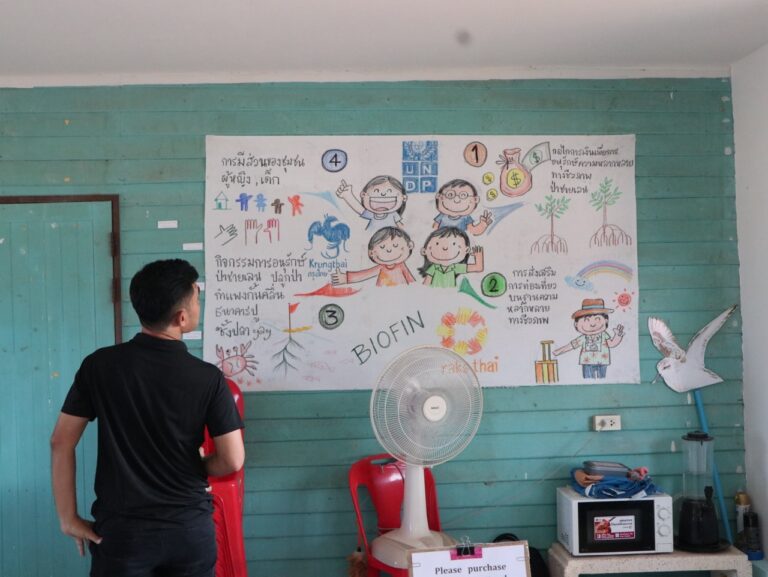
The opportunity came through the Biodiversity Finance Initiative (BIOFIN), implemented by UNDP in partnership with Indonesia’s Ministry of National Development Planning (BAPPENAS) and Badan Amil Zakat Nasional (BAZNAS) in Bulukumba Regency. Through a Green Zakat approach, zakat funds were channelled towards helping farmers develop beekeeping as a livelihood that also supports biodiversity conservation.
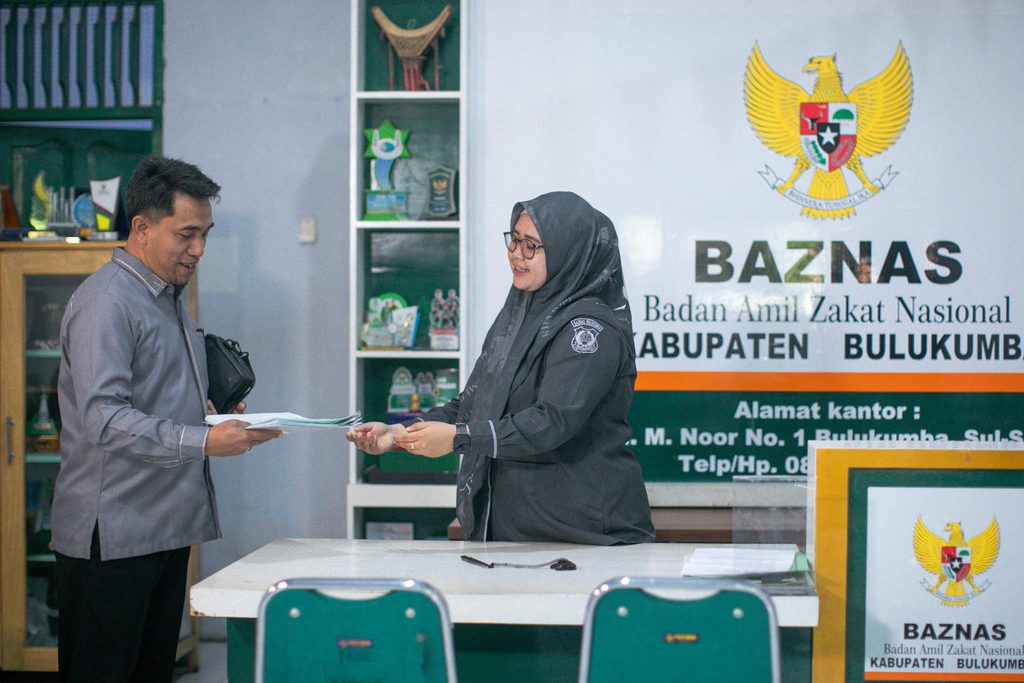
For BAZNAS Bulukumba, the programme is part of its effort to help economically vulnerable communities become more self-reliant. “One of the objectives of zakat management is to build the independence of mustahik,” said H. Muhammad Yusuf S., Vice Chair II for Zakat Distribution and Utilization at BAZNAS Bulukumba. The support in Kahayya includes training, assistance and monitoring as farmers learn to manage bee colonies and develop honey production.
In December 2025, UNDP and BAZNAS Bulukumba organised a four-day training programme for local farmers. Kadir and fellow farmers learned how to attract wild colonies, transfer them into purpose-built nesting boxes, manage bee populations, and prepare for future honey production. The training went beyond technical skills, helping farmers understand the deeper relationship between bees, vegetation, and the long-term health of their farms.
“After the training, farmers have become more selective in choosing which trees to cultivate and plant, so they can also serve as food sources for the bees,” Kadir explained.
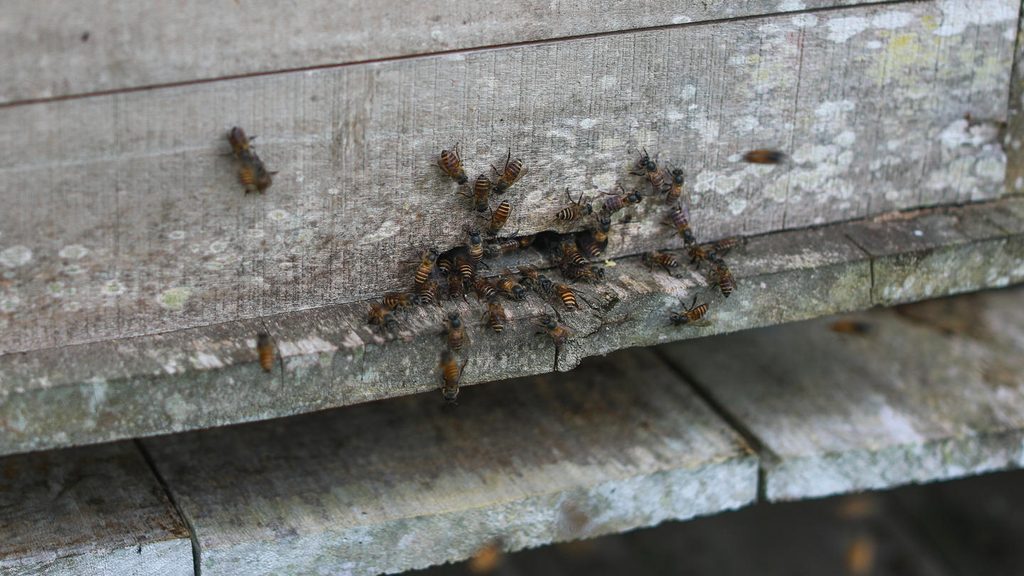
So far, farmers have set up 20 wooden hive boxes and identified around 100 rock cavities as potential nesting sites. Of these, two wooden boxes and roughly 80 rock cavities have since been colonized by bees, an early but encouraging sign that the approach is taking hold.
That shift in perspective may prove just as important as the beekeeping skills themselves. Bees depend on flowering trees and plants for nectar and pollen; in turn, they support pollination across both farmland and forest. As farmers grasp these connections, maintaining vegetation is no longer seen only as a conservation measure. It becomes part of what keeps farms productive and bee colonies healthy.
What began as a beekeeping initiative is gradually reshaping how farmers see biodiversity: not only as something to protect, but as an asset that underpins livelihoods, resilience, and long-term prosperity.
Turning Biodiversity into Opportunity
The work does not end with the farmers tending to the hives. Honey also needs to be processed, filtered, checked for quality and packaged before it can reach consumers. These activities are creating opportunities for women in farming households, who are taking part in the post-harvest process and the development of honey-based products.
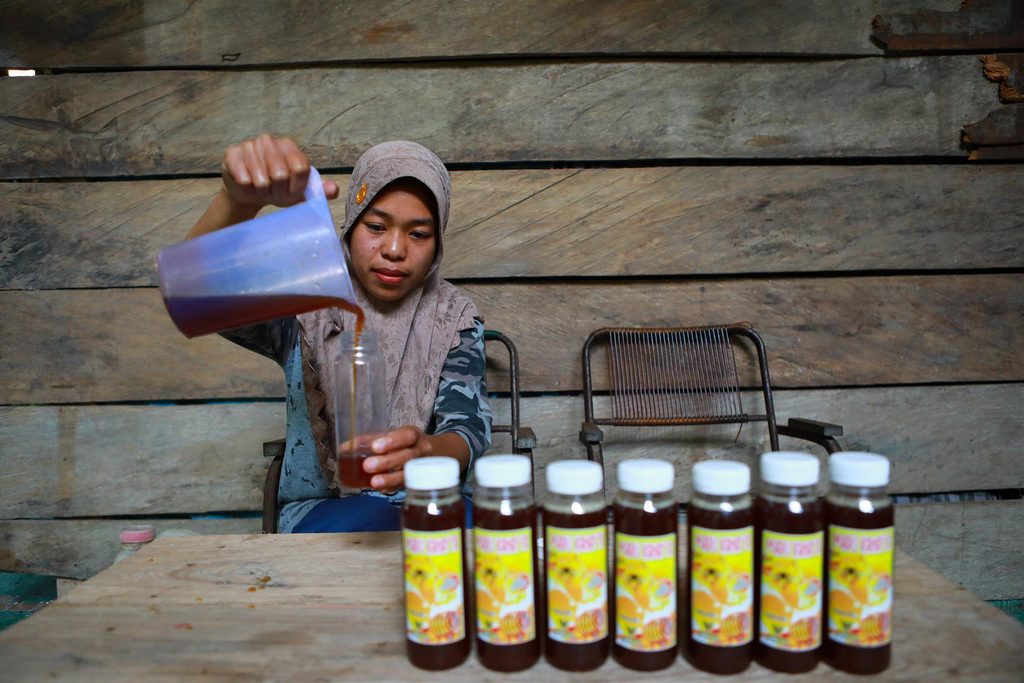
The honey enterprise is still in its early stages, and a reliable supply and market will take time to establish. But it offers the possibility of income beyond coffee, while bringing more members of the community into the business.
For families in Kahayya, where farming remains central to household incomes, another product from the same landscape could make a difference. The challenge now is to develop the skills, production and market access needed to turn that possibility into a viable enterprise.
Making Conservation Part of the Livelihood
Kahayya’s experience shows how biodiversity finance can translate into practical action at the community level. Through BIOFIN, UNDP works with government and other partners to identify and mobilise financing for biodiversity, including approaches that connect environmental priorities with local economic activities.
In Kahayya, the Green Zakat approach puts that idea into practice by directing zakat towards beekeeping and the skills farmers need to manage it. It also shows how an established community financing mechanism can support activities that benefit both local households and the surrounding environment.
For Kadir and his fellow farmers, coffee remains an important part of their livelihoods. Now, they are learning to make room for another harvest. The bees are still there in the trees and rocks, as they have been for generations. What is changing is how the community sees their value.
***
Author: Anastasia Weningtias, Communications Associate, UNDP Indonesia
Editor: Nabilla Rahmani